Aos Sí – The Fairy Folk

The Celtic Navigator

The Celtic Navigator

The Soul of Cahernane: Behind the doors

2026. június 10. - Vacsuti


Céad Míle Fáilte azaz: Százezer üdvözlet!

A Cahernane örökségehu.png

Hogy mi is az a "Cahernane"? 

cahernane_front.jpg

Vannak helyek, amelyekről már az első pillanatban érzed, hogy többek egyszerű szállodánál. Számomra a Cahernane House ilyen hely.

Először is tisztáznunk kell, hogy hol is járunk. A Cahernane House Hotel Kerry megyében, Killarney városában, a híres Muckross Road mentén helyezkedik el, nem messze a Killarney National Park területétől, saját parkosított birtokkal körülvéve.

A Cahernane egy kis luxushotel, majd' 150 éves múlttal és annak történelmével, sztorijával.

Egy hely, ahol a 19. századi nemesi elegancia találkozik az ír vadon nyugalmával. Engedjétek meg, hogy körbevezesselek benneteket a számomra oly kedves Cahernane House meleg, barátságos falai között.

A Cahernane House

Jelen formájában hotelként funkcionál, mindösszesen 48 szobával, családias személyzettel, akik szeretnek együtt dolgozni. És velem együtt – imádják ezt a helyet!

Amikor a Muckross Roadról behajtasz a nagy kovácsoltvas kapun, egy hosszú fasor fog a ház bejáratához vezetni. Hatalmasra nőtt fák, alattuk nárciszok, íriszek vonják el a tekintetedet, vagy a kerítés túloldalán a békésenalle.jpg legelésző birkanyáj. Vagy tehenek....

Esetleg szarvasok: ír gímszarvas csapat. És igen, ez itt normális! A Hotel a Killarney Nemzeti Park szomszédságában fekszik, ahol az őshonos ír gímszarvas populáció legnagyobbja található, ma már a számuk az ezer példányt közelíti meg.

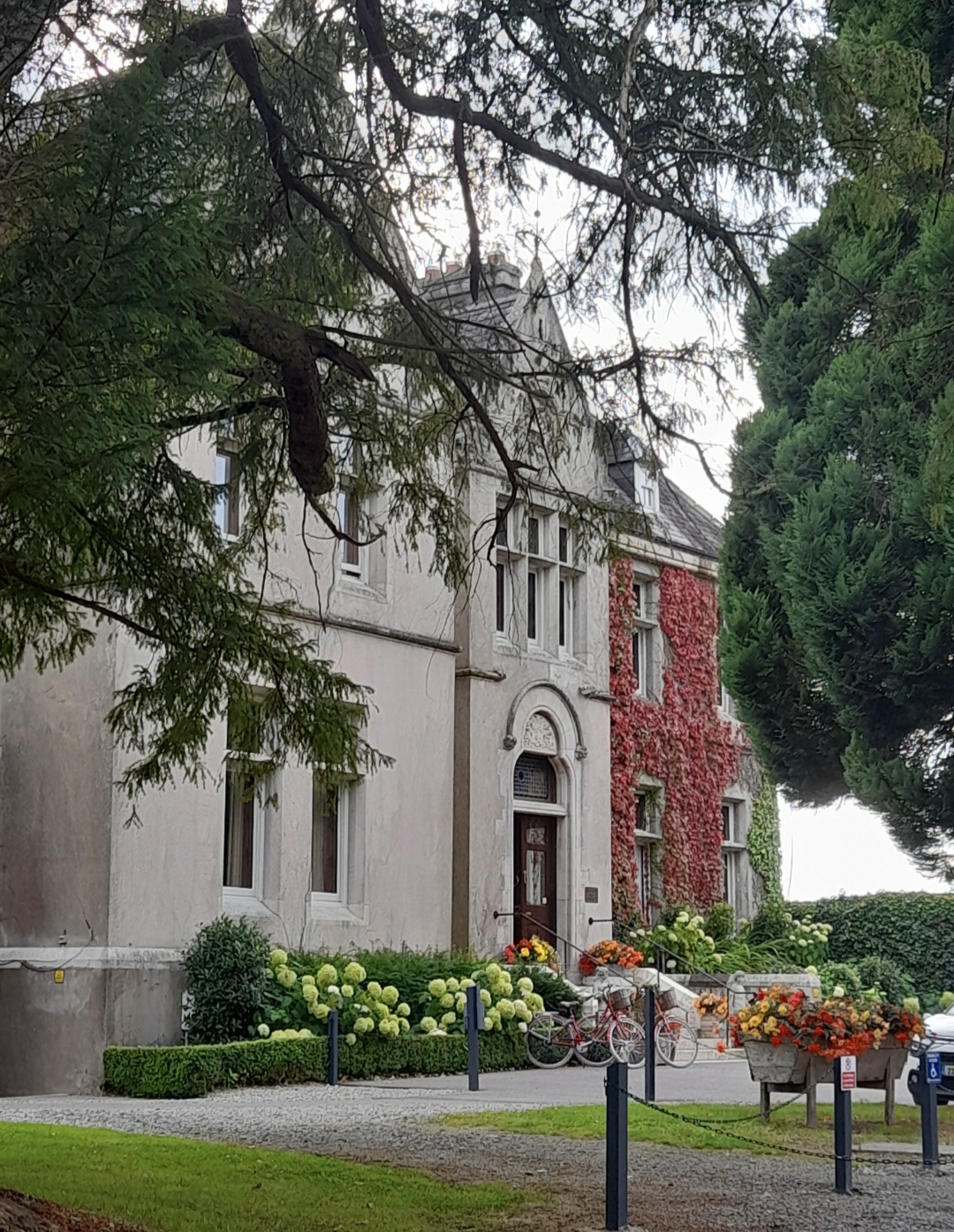
A fasor végére érve feltűnik maga az épület: egy késő viktoriánus kúria. Ruszkini ihletésű neogótikus stílusban épült 1877-ben, a Herbert család rezidenciájaként. A híres ír építész, James Franklin Fuller tervezte az épületet, eredetileg azonban sokkal nagyobbra, mint amekkora végül is megépült.

Ez a stílus a viktoriánus korszak egyik romantikus irányzata volt. A Cahernane esetében ez több részleten is látszik. Az épület erősen romantikus jellegű, vidéki nemesi ház hangulatát kelti magas, viktoriánus ablakokkal, díszes oromfalakkal, gazdagon faragott kőelemekkel, gótikus hatású bejárattal és meredek palatetőkkel.
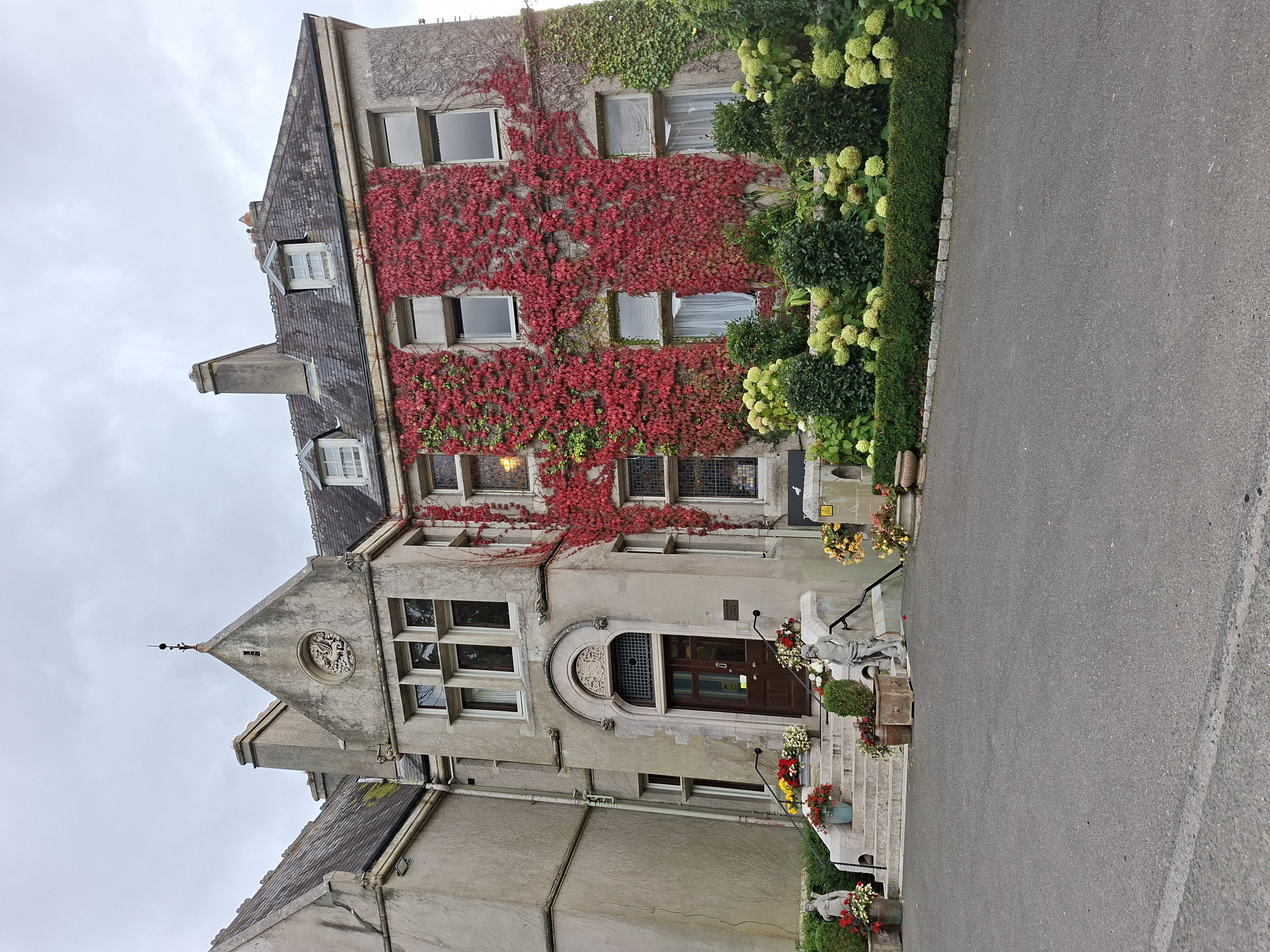
 

cahernane.jpgA nem színezett falakat befutja a vadszőlő, a Boston Ivy, amitől évszakonként más-más színt mutat a vendégeinek, hozzájárulva a kertek színes virágainak színkavalkádjához. A hortenzia és a begónia elmaradhatatlan díszei a kerteknek, és ha levendula illatot érzel, nem az orrod csap be!

Amikor megállsz a hotellel szemben, az az érzésed támad, hogy egyszerre tűnik kicsinek és mégis monumentálisnak.

Virágokkal keretezett lépcsősor vezet fel a nagyméretű bejárati ajtóhoz, amit egy timpanon keretez.

Ahogy felnézel — mert fel fogsz nézni! — egy Griffin fog lenézni rád, az erő, a hatalom és a jólét szimbólumaként. Én erre minden alkalommal felnézek, amikor megérkezem, mert valahogy az az érzés kerülget, hogy egy nap visszaköszön nekem: Jó estét Judit! Hogy vagyunk ma?

Ez a homlokzat tényleg gyönyörű példája a romantikus viktoriánus „Big House” stílusnak Kerryben. A kis groteszk fejek az ablakok környékén szintén a kort idézik, bár nem vízköpők, de nagyon hatásos látványt nyújtanak. És ebből egyet odabent is felfedezhetsz, ha figyelmesen sétálsz körbe!

Lám, mennyi mindent láttunk már és még be sem léptünk az ajtón....

A történetünk az 1800-as évek közepétől kezdődik, Henry Herberttel, a befolyásos Herbert család egyik fiával. 20260511_180155.jpg Henry – ahogy a történet szól – beleszeretett Katherine Stewartba és feleségül is vette 1865-ben.

A család ekkortájt egy Queen Anne stílusú házban élt a Cahernane birtokon, a mai épület helyén, amikor is Henry megörökölte a házat a bátyjától, Richardtól 1875-ben.

Ebben a régi házban nem voltak fürdőszobák, ami a mi történetünk szempontjából igen jelentős, mert Katherine, a felesége nem volt hajlandó tovább egy olyan házban élni, ahol kinti vécék voltak és egy Patsy "the Bucket" nevű ember hordta az éjjeli vödröket...

Hogy a szeretett feleség kedvében járjon Henry, 1877-ben lebontatta a régi házat és felépíttette a modern épületet, amit ma látunk, fürdőszobákkal és egy hatalmas átriummal az épület oldalán.

A  Lobby

20250911_204555.jpg


Henrynek és Katherine-nak 4 lánya és egy fia született a házasságból: Violet, Katherine Olive, Winifred, Arthur és Gwendolyn. Ha a mai lobbiban felnézel a mennyezetre, szembetűnik néhány faragott konzolkő (oszlopfő) monogramokkal.


Ezek a 4 idősebb gyerek nevének monogramjai, és ami még érdekesebb, mindegyik háttere egy-egy növény levele, ami bizony nem véletlen, hanem jelentéssel bír:


  •  viola levelek Violetnek20260511_202248.jpg
    • olíva levelek Katherine Oliviának
    • Winifred imádta Írországot, így neki Shamrock levelek (lóhere)
    • Arthur (Arthur Stewart Herbert) monogramja ASH (kőrisfa), így neki kőrisfa levelek lettek faragva.


Gwendolynnak, a legfiatalabb gyermeknek nem készült oszlopfő valamilyen oknál fogva, de a hotel vezetése tervezi, hogy utólag készíttet egyet.


Mindig azon gondolkodom, milyen levél kerülhetne Gwendolyn monogramja mögé. Talán a borostyán...  Ahogy az a mai Cahernane logóban is megjelenik, mert annak a szimbolikája az örök kötődés, a hűség, emlékezet és az időtállóság. Nagyszerű gesztus lenne!
fireplace.jpg

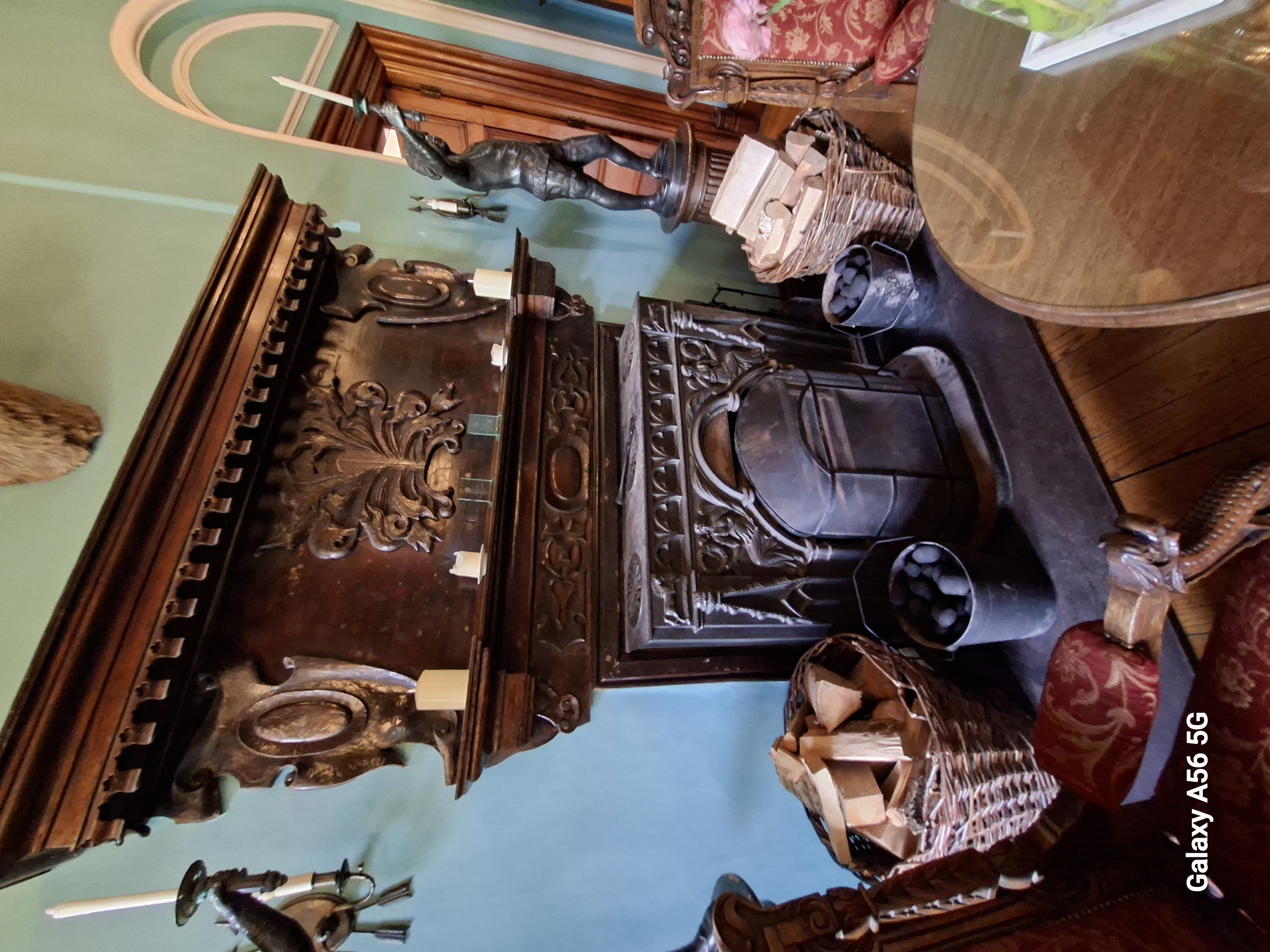
A lobbiban egy másik ikonikus elem a kandalló, ami még az eredeti házból származik, az 1750-es évekből! Gondolj csak bele: egy olyan kandalló tüzénél üldögélni, ami mellett még Henry Herbert családja is eltöltött jónéhány kellemes estét, borospohárral a kezükben beszélgetve, nevetve.... igazi élő történelem.


Ahogy körbenézünk, feltűnhet a lépcsőkorlát egyedisége a maga részletgazdag fa faragványaival, mintájával. Ez is az eredeti házból származik, szerencsére a hotel kiváló állapotban megőrizte és karbantartja, hogy még sokáig csodálhassák a vendégeink.20260511_202337.jpg


Itt található egy különösen látványos antik bútor is, közvetlenül a bejárat mellett: egy Davenport íróasztal, amely az 1890-es években készült Killarneyben. Már a gondolata is gyönyörűséges, hogy azon írj meg egy levelet a szeretteidnek.

davenport.jpg


A hotel számára felbecsülhetetlen értéket képvisel. Ahogy később körbesétálunk az épületben és a szobákban, még számos hasonló, ikonikus darabbal találkozhatunk.

The Herbert`s Restaurant
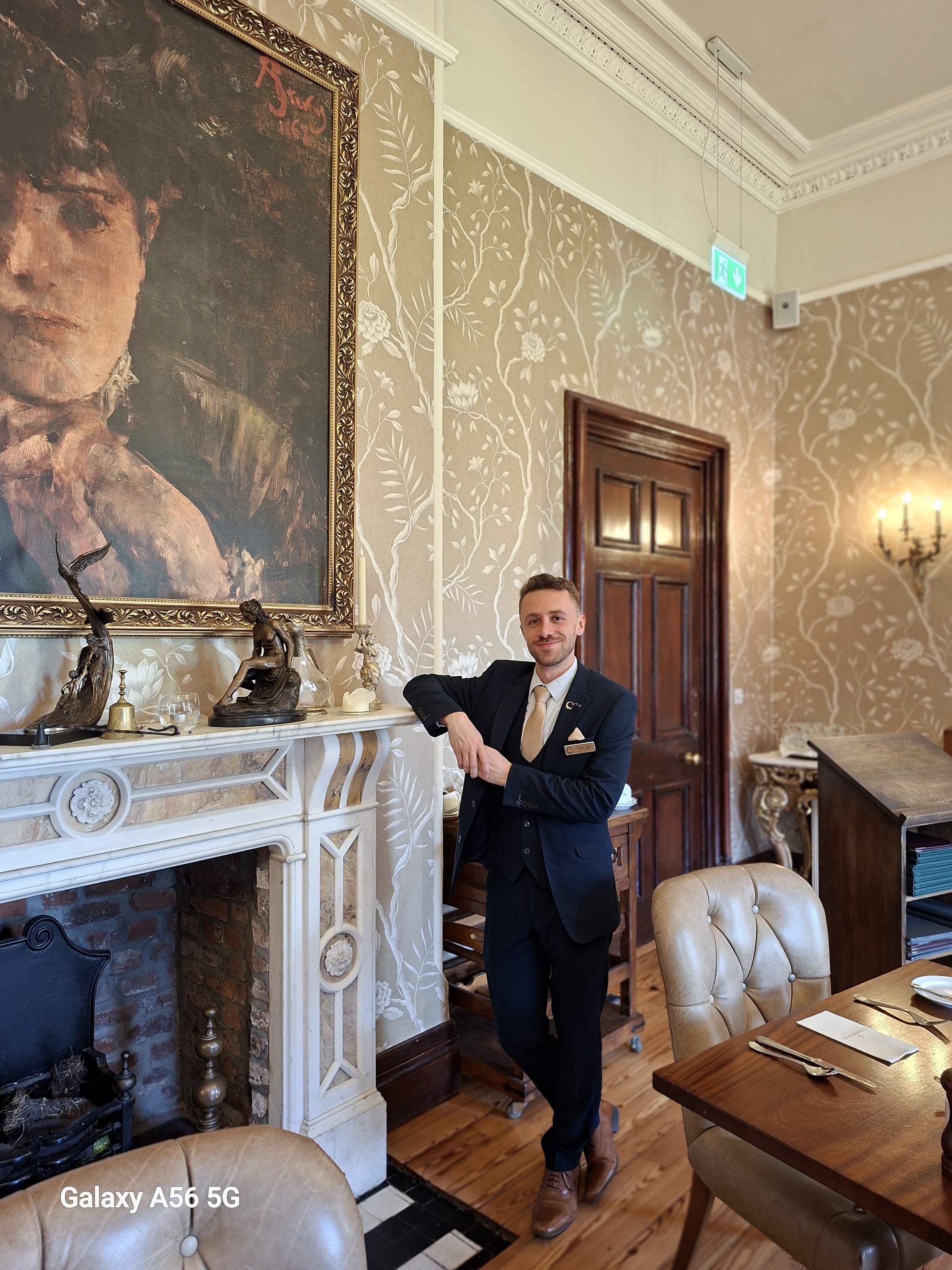
 

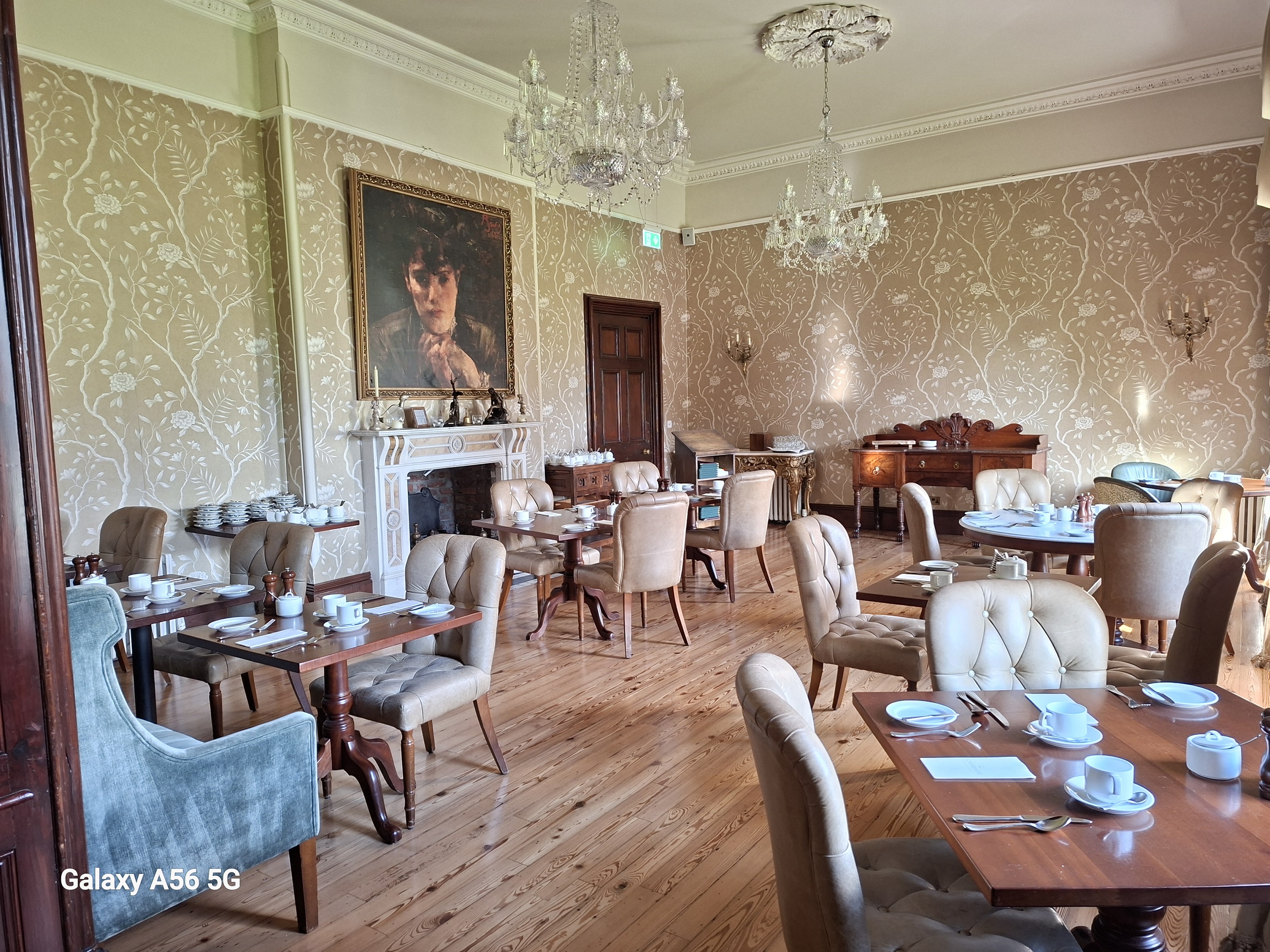
hayden.jpgVegyük utunkat az étterem felé, itt az egyik legszembetűnőbb részlet az egyedi tapéta lesz, látványos bazsarózsa mintázatával, különleges színével. Hát nem egy megszokott, mai modern burkolat az biztos! A tapétát a londoni Lewis & Wood készítette kifejezetten a hotel számára.

A szemkápráztató, hatalmas csillárok a lobbyban és az étteremben a Tara Crystal műhelyéből származnak, County Waterfordból. 20260511_202314.jpg


20260524_201336.jpg

A gyönyörű fa padlózat hosszú éveken át a padlószőnyeg alatt rejtőzött. Csak a felújítás során fedezték fel újra, majd gondosan restaurálták és új életre keltették.

Sajnos az évtizedeken át ismételt csiszolások miatt a fa mára annyira elvékonyodott, hogy a szakemberek szerint a tavalyi volt az utolsó alkalom, amikor még biztonságosan fel lehetett újítani a hagyományos módszerrel.

A hotelnek ezért ma már modern megoldásokat kell keresnie a történelmi padlózat hosszú távú megőrzésére.
herberts.jpg


A Herbert Család Könyvtára 

library.jpg

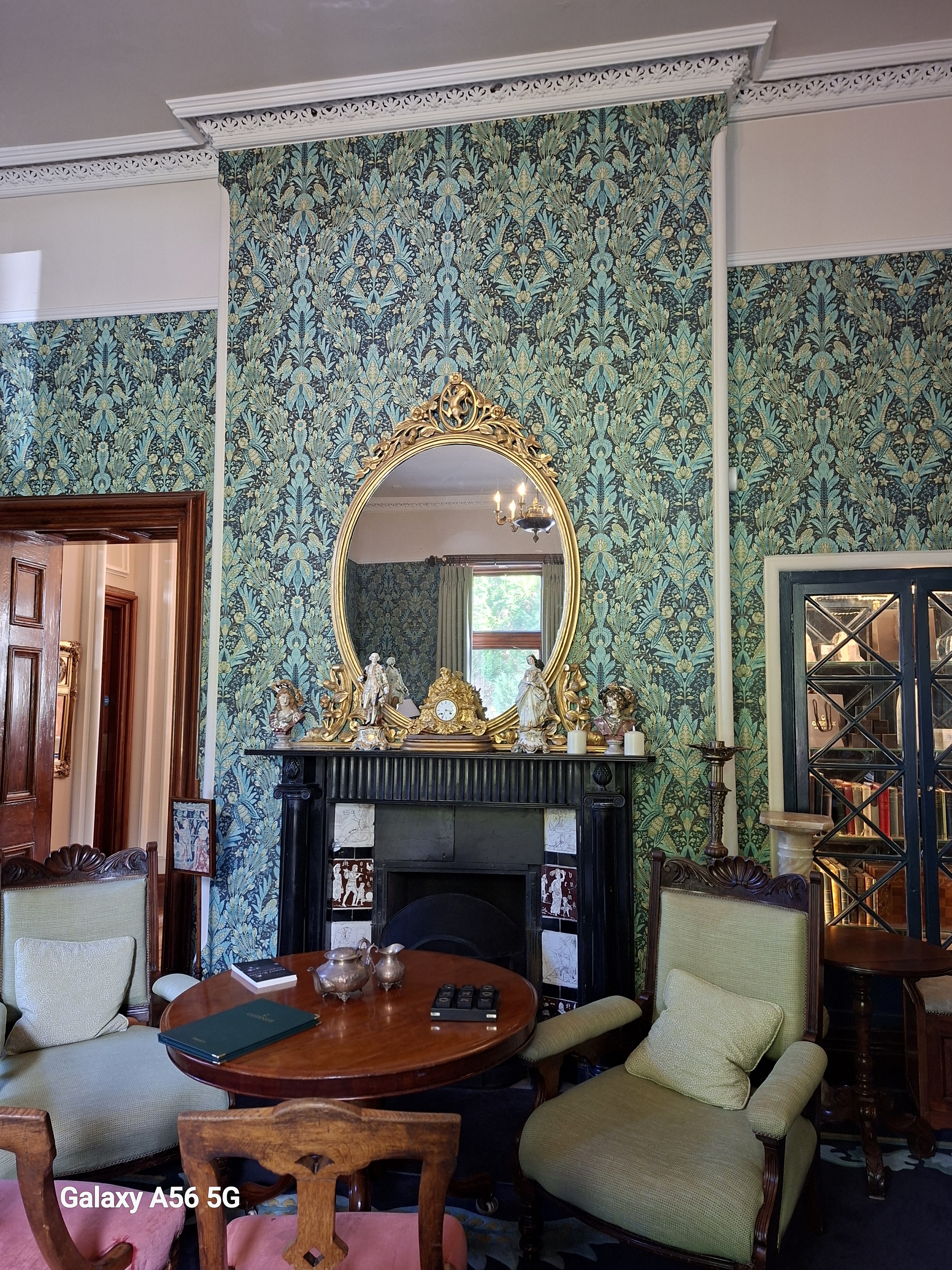
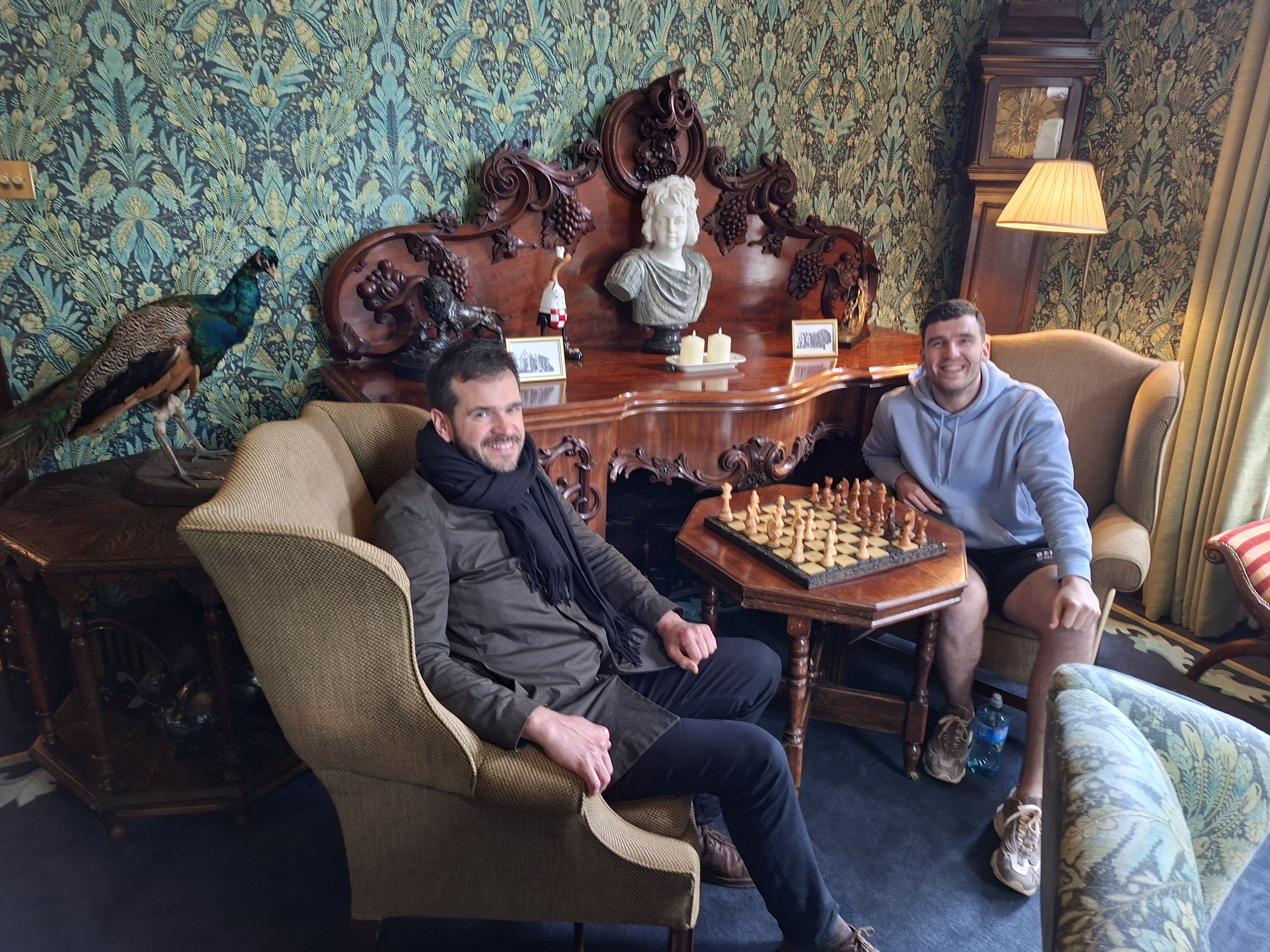
A lobbyból belépünk a Könyvtárszobába. A jellegzetes kék-zöld színvilág, az antik bútorok, a hatalmas, kényelmes fotelek, valamint a kandallóban pattogó tűz hangja és melege szinte exkluzív meghívásként csalogatnak bennünket, hogy kényelmesen elhelyezkedjünk a puha fotelekben, levegyünk egy könyvet a polcról, és átadjuk magunkat a történetének.

Itt is láthatunk egy kandallót, amely egyidős a házzal. Érdemes közelebbről is szemügyre venni a kandalló csempéit — a rajtuk látható jelenetek saját kis történeteket mesélnek.

Ha pedig lenézünk a lábunk elé, egy igazi ritkaságon állunk: egy eredeti Connemara szőnyegen.

Ez az egyedi, kézzel készített darab valódi luxuscikknek számít, értéke ma már egy kisebb vagyon.


A tapéta színei és a gazdag textíliák együtt igazi békés, meghitt hangulatot teremtenek. Érdemes a falakon függő festményeken is elidőzni — néhány közülük igazán figyelemre méltó darab.
library_eoin.jpg

A hegyekre néző szalon20260511_180211.jpg

A következő állomásunk a szalon, ahol mindig lágy, halk zene szól. Sokszor tapasztalom, hogy amikor a vendégeink belépnek ide, óhatatlanul kiszalad egy “aztaaaa! ez igen!” mondat, csodálattal és mosollyal tekintenek körbe, majd ki az ablakon.

Itt is fogad bennünket egy kandalló, amely az 1877-ben épült ház eredeti része.

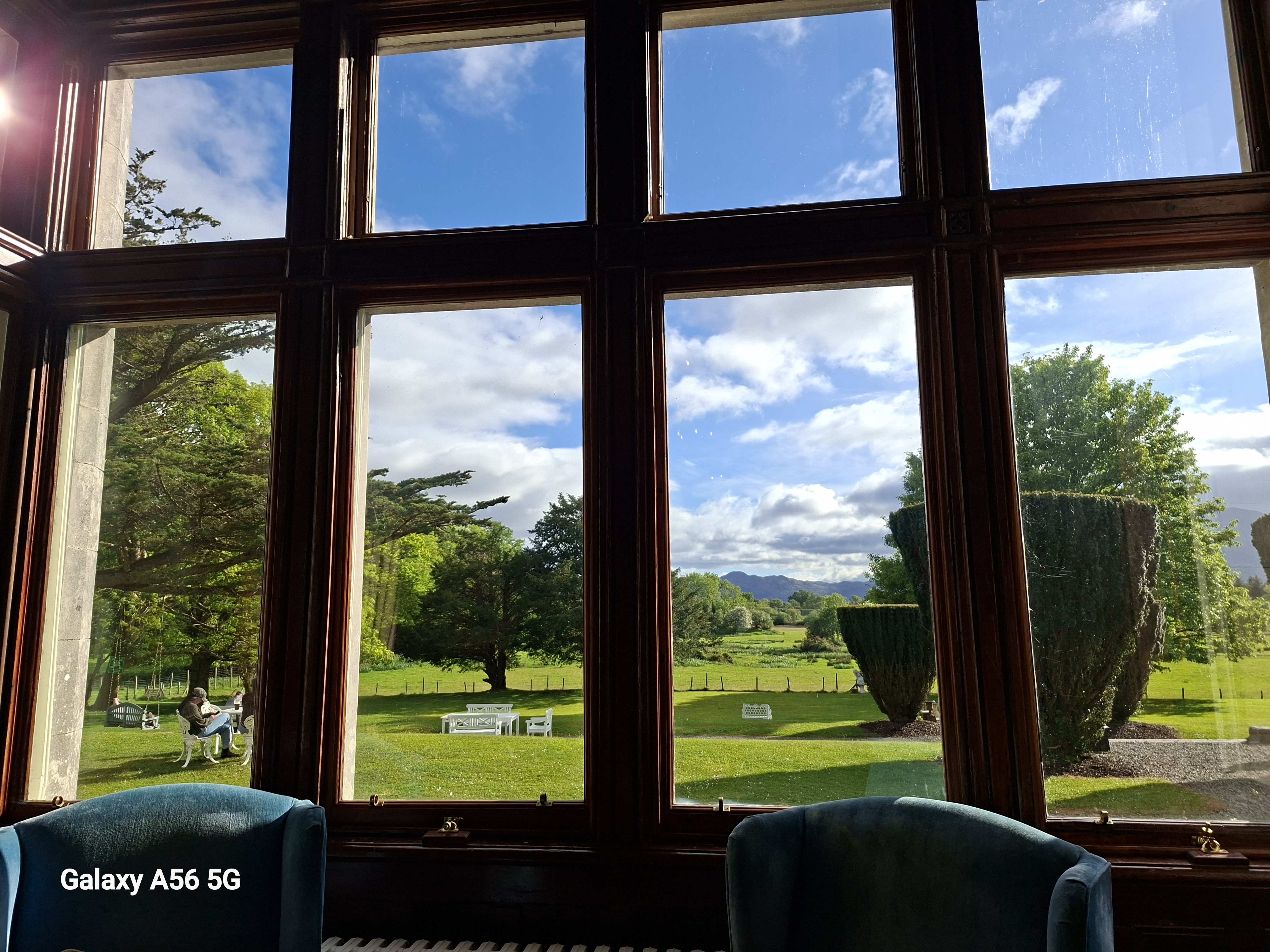
De ami ezt a helyiséget igazán különlegessé teszi, az a lélegzetelállító kilátás a hegyekre.


Egy itt elfogyasztott pohár bor mellett könnyű megérteni, miért térnek vissza ide újra és újra a vendégeink.
drawing_room.jpg

20260511_180215.jpgHenry Herbert 1898-ban hunyt el, a házat és a birtokot fia, Arthur Stewart Herbert örökölte.

Arthur az 1900-as évek elején elköltözött a Cahernane-ből, és a házat — ismereteink szerint — tíz évre bérbe adta. Később az épület fokozatosan hotelként kezdett működni, majd Arthur 1940-ben eladta a házat egy olasz származású üzletembernek, Albericcinek.

Ahogy átsétálunk az átriumba, ma már nehéz elképzelni, hogy a front és a hátsó átrium valaha egyetlen hatalmas tér volt.20260511_181549.jpg

A szökőkút

A hotel kerti szárnya az 1960-as években épült hozzá az eredeti épülethez, egy nagyobb felújítás részeként.

A télikert egyetlen nagy nyitott térként működött, azonban a Garden Wing és az új lépcsőház kialakítása miatt a teret ketté kellett osztani.

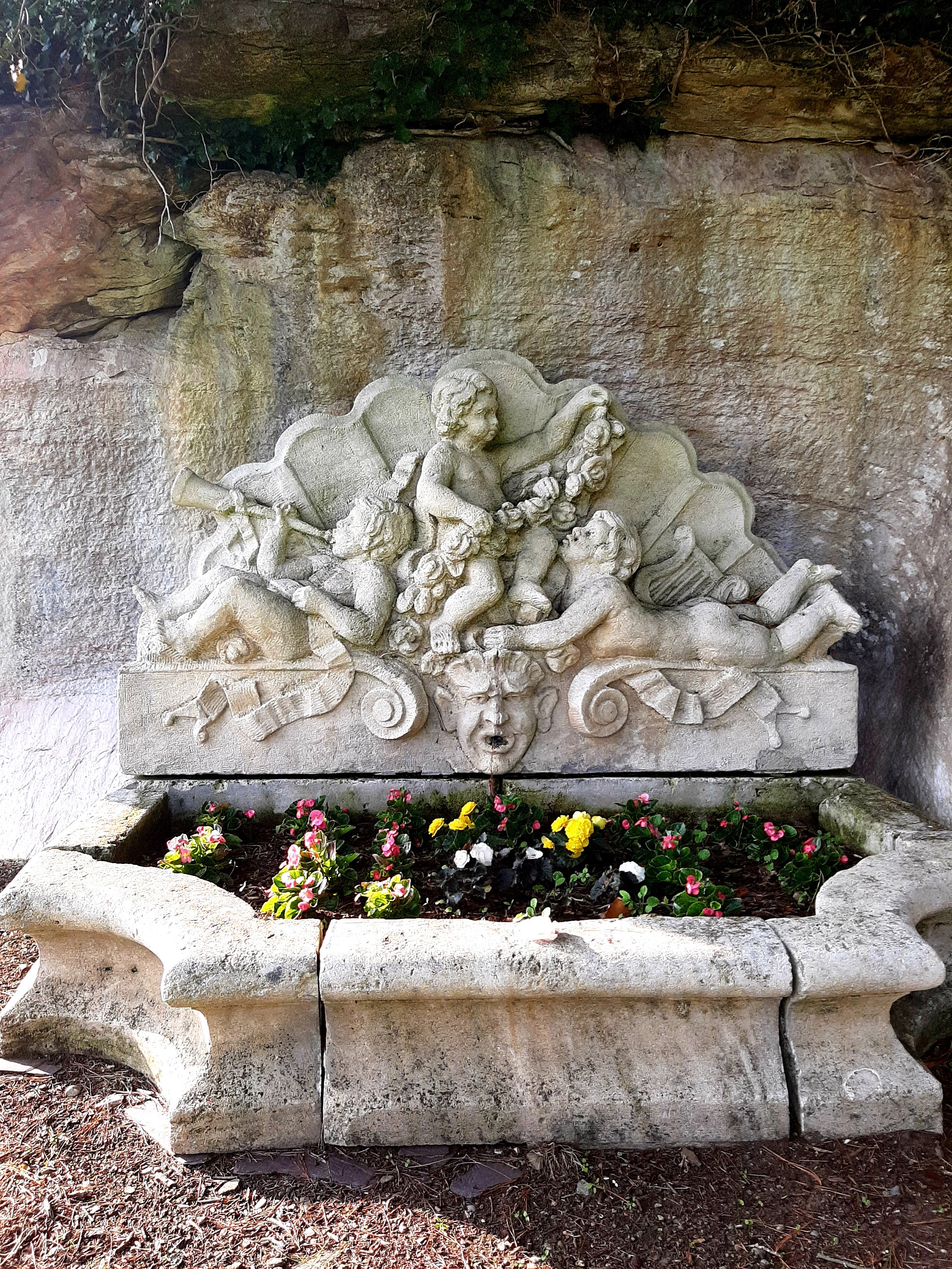
Az eredeti télikertben állt egy impozáns, faragott kőszökőkút is. Az építkezések során azonban útban volt, és az újonnan kialakított kisebb átriumokban már nem maradt elegendő hely számára.

A helyi legenda szerint az egyik építőmunkás javasolta, hogy a szökőkutat helyezzék ki a kertbe. Amikor a megfelelő területet kereste a szökőkútnak, az egyetlen méltó hely egy tündérkörön belül volt, a nagy szikla oldalán.
fauntain.jpg

Írországban a tündérköröket sokan ma is komoly tisztelettel kezelik, és a legtöbben kerülik megbolygatásukat, mert a tündérek igen nagy balszerencsét tudnak okozni.

Az építőmunkás végül alkut kötött a tündérekkel, hogy a szökőkút ott maradhasson és a tündérek se okozzanak galibát a látogatóknak.

20250614_193045.jpgA helyi legenda szerint a tündérek azt kérték az építőmunkástól, amiről nem tudja, hogy az övé. Emberünk először meghökkent, aztán jót nevetett ezen, hiszen hogyan is hiányozhatna neki valami, amiről nem is tudja, hogy van neki…

A munkásunk nem tudta, hogy egy 9 évvel azelőtti kapcsolatából született egy kislány. Akiről nem tudott, az anya soha nem mondta el neki.

A tündérek elvették, ami járt nekik az alku szerint.

Azóta úgy tartják, hogy aki belép a tündérkörbe, és kis ajándékot, virágot, csillogó követ vagy egy fényes érmét hagy számukra, annak egy kívánságát teljesítik. Erre nekem bizony hiteles tanúim is vannak.

Ez a szökőkút ma is ott található, aki teheti szánjon időt a meglátogatására, esetleg egy kis ajándékkal felszerelkezve a kívánság is elsuttogható....


A hotel kertje körbesétálható, érdemes kicsit elidőzni, a táj és a környezet nyugalmában gyönyörködni, vagy leülni kicsit a fűre és a hegyeket nézve átélni a harmóniát ember és természet között. 

20230809_182730.jpg

20230815_184555.jpg

Cellar Bar

Ha lesétálunk a Cellar Bar-ba, egy különleges térbe érkezünk.
A borospince a Muckross House pincéinek másolata, jellegzetes fehérre meszelt falaival, boltíveivel együtt.
A Cellar Bar és maga a pince eredetileg kizárólag a személyzet használatában állt. Később alakították át a hotel vendégei számára, meghitt és hangulatos bárként, miközben sikerült megőrizni a régi pince eredeti karakterét.


Bár a hotelnek 48 szobája van, nincs 13-as — és 9-es szoba sem. Sok más hotelhez hasonlóan a 13-as szobát babonából hagyták ki.
A 9-es szoba azonban azért nem létezik, mert a ház eredeti számozása a 10-es szobával kezdődött. Később, amikor a Coach House szobáit hozzáépítették, összesen csak nyolc szoba készült — ezért nincs a mai napig sem 9-es szoba.

A 4. emelet a történet szerint a gyerekeké volt.

A felújítások, festések során azon a szinten, a 20-as szobával 20260511_184702.jpg szemben előkerült a falon egy kézzel festett vadkacsa képe.
Az évek során többször próbálták eltüntetni, lefesteni/átfesteni, de valahogy a kacsa mindig előtűnt a festék alól. Ismereteink szerint Katherine Olive Herbert remek festő volt, így hozzá kötik a festményt.


Katherine Olive Herbert — a Cahernane freskó mögött álló művész


A Cahernane House egyik legkülönlegesebb felfedezése egy apró kacsafestmény volt, amelyet a felújítás során találtak meg több réteg festék és tapéta alatt. A hotel saját történeti anyagai és a helyi hagyomány szerint a freskót valószínűleg maga Katherine Olive Herbert festette.


Katherine Olive Herbert 1872-ben született a Cahernane House-ban, a birtokot generációkon át birtokló Herbert család tagjaként. Házassága után Katherine Everett néven vált ismertté, de egész életében szoros kapcsolatban maradt Cahernane-nel.


Nem egyszerű amatőr festő volt: Londonban, a híres Slade School of Fine Art művészeti iskolában tanult, amely korának egyik legelismertebb művészeti intézménye volt. A Cahernane történeti kiadványa „kiváló festőként” említi őt. Az alkotás fontos része volt az életének — érdekelte a művészet, a kerttervezés, az irodalom és az építészet is.


Magát a kacsa freskót a ház egykori gyerekszobájának területén találták meg. Az évek során a falakat többször átfestették és letapétázták, a legenda szerint azonban a festmény újra és újra előbukkant a rétegek alatt. Emiatt idővel a hotel saját kis legendájává vált.


A festmény nem hivatalos vagy megrendelt műalkotás benyomását kelti, hanem inkább valami személyeset és játékosat — egy apró emléket abból az időből, amikor a Cahernane még valódi családi otthon volt, tele gyerekekkel, élettel és kreativitással.


Ma a freskót védőüveg mögött őrzik, így a látogatók nemcsak egy rejtett festményt láthatnak, hanem egy személyes nyomot is Cahernane egyik legművészibb lakójától. Bertie – a kacsa így soha többé nem tud elveszni a kíváncsi felfedezők szemei elől.


A Manor House szobáinak természetesen számuk is van, de emellett saját neveket is kaptak. A folyosókon sétálva igazi különleges élmény elolvasni ezeket a neveket — mintha maga a ház mesélne egy kicsit a múltjáról.


És talán pontosan ez teszi a Cahernane-t igazán különlegessé. Minden folyosó, minden szoba és minden régi kőfal mögött újabb történetek várnak felfedezésre.


A Cahernane pillangoi

Ott van végezetül a 21-es szoba, a Gwendolyn.20260517_190130.jpg

Sok évre visszanyúlóan, sok-sok vendég elmondása szerint furcsa dolgok történtek ott éjszakánként. Volt aki a magától működő zuhanyról számolt be, mások nyikorgó léptekről éjszaka a folyosón, vagy a szoba felett… Sem nyikorgó lépcsőnk nincs…. Sem emelet a szoba felett.

A mi kis “szellemünk” egy kislány… tán 8-9 éves forma, kedves, kacagós gyermek, aki imádja a pillangókat…


Az évek alatt kitapasztaltuk, hogy amikor ő jelen van, a felső szinten nagyon sok a pillangó. Kedves, pajkos, játékos kislány, aki szereti megviccelni a kollégákat és vendégeket egyaránt.

Sokszor hajtogattam neki origamilepkéket, de előfordult, hogy egy vendégünk is hagyott ott számára hajtogatott papír pillangót.

20230813_205404.jpg

Hogy ki lehet ő és mi a története?


Emlékeztek az építőmunkás történetére?


Az egyezségre a tündérekkel…? 


Céad Míle Fáilte ie.png

The Soul of Cahernane — Behind the Doors


What Exactly Is Cahernane?

There are places that, from the very first moment, feel like much more than just a hotel. For me, Cahernane House is one of those places.

First of all, let us establish where we are. Cahernane House Hotel is located in Killarney, County Kerry, along the famous Muckross Road, not far from Killarney National Park, surrounded by its own beautifully landscaped estate.

Cahernane is a small luxury hotel with almost 150 years of history, along with all the stories and memories that come with it.

It is a place where 19th-century aristocratic elegance meets the peace and tranquillity of the Irish countryside. Allow me to take you on a tour through the warm and welcoming walls of the Cahernane House, a place that is very dear to my heart.

Cahernane House

Today, the house operates as a hotel with just 48 bedrooms and a close-knit team of staff who genuinely enjoy working together. And, like me, they absolutely love this place.

As you turn off Muckross Road and drive through the large wrought-iron gates, a long tree-lined avenue leads you towards the house. Towering trees stretch overhead, while daffodils and irises draw your attention below. Beyond the fence, you may spot a peaceful flock of sheep grazing quietly.

Or perhaps cattle...

Or even deer — a herd of native Irish red deer. And yes, that is perfectly normal here! The hotel sits beside Killarney National Park, home to Ireland's largest native red deer population, which today numbers close to one thousand animals.

As you reach the end of the avenue, the house itself comes into view: a late Victorian mansion. Built in 1877 in a Ruskin-inspired Neo-Gothic style as the residence of the Herbert family, it was designed by the renowned Irish architect James Franklin Fuller. Originally, however, the plans were for a much larger house than the one that was eventually built.

This architectural style was one of the romantic movements of the Victorian era. At Cahernane, it can be seen in many details. The building has a strongly romantic character, evoking the atmosphere of a country manor house with its tall Victorian windows, decorative gables, richly carved stonework, Gothic-inspired entrance and steep slate roofs.

The unpainted walls are covered with Boston Ivy, which changes colour with the seasons, giving the house a different appearance throughout the year and adding to the colourful display of flowers in the gardens. Hydrangeas and begonias are ever-present features of the grounds, and if you catch the scent of lavender in the air, your nose is not deceiving you!

Standing in front of the hotel, you may find yourself feeling that the building somehow appears both modest and monumental at the same time.

A flower-framed staircase leads to the large entrance door, which is crowned by a pediment above.

And as you look up — because you will look up! — you will find a Griffin gazing down at you, a symbol of strength, power and prosperity. I look up at it every single time I arrive because I always get the feeling that one day it might look back and say, “Good evening, Judit! How are we today?”

The façade is truly a beautiful example of the romantic Victorian "Big House" style found in Kerry. The small grotesque heads around the windows are also characteristic of the period. They are not gargoyles, but they certainly make a striking impression. If you walk around the house carefully, you may even discover one hidden inside the building as well.

Just look how much we have already seen, and we have not even stepped through the front door yet...

Our story begins in the mid-1800s with Henry Herbert, one of the sons of the influential Herbert family. As the story goes, Henry fell in love with Katherine Stewart and married her in 1865.

At that time, the family lived in a Queen Anne-style house on the Cahernane estate, standing on the site of the present building. In 1875, Henry inherited the property from his brother Richard.

The old house had no bathrooms, which becomes a very important detail in our story, because Katherine was unwilling to continue living in a house with outdoor toilets and a man known as Patsy "The Bucket" carrying away the night buckets...

To keep his beloved wife happy, Henry demolished the old house in 1877 and built the modern residence we see today, complete with bathrooms and a magnificent atrium on the side of the building.

The Lobby

Henry and Katherine had five children: four daughters and one son – Violet, Katherine Olive, Winifred, Arthur and Gwendolyn. If you look up at the ceiling in today's lobby, you will notice several carved corbels decorated with monograms.

These represent the monograms of the four eldest children, and what makes them even more interesting is that each one is backed by the leaves of a plant chosen specifically for that child:

• Violet is represented by violet leaves.

• Katherine Olive is represented by olive leaves.

• Winifred adored Ireland, so her monogram is surrounded by shamrock leaves.

• Arthur's full name was Arthur Stewart Herbert. His initials form the word "ASH", and therefore ash tree leaves were carved behind his monogram.

For some reason, no corbel was ever created for Gwendolyn, the youngest child. However, the hotel management is considering commissioning one to complete the collection.

I often find myself wondering which leaves would be placed behind Gwendolyn's monogram. Perhaps ivy... just as it appears in the modern Cahernane logo. Ivy symbolises eternal connection, loyalty, remembrance and endurance through time. It would be a wonderful tribute.

Another iconic feature of the lobby is the fireplace, which actually comes from the original house and dates back to the 1750s. Just imagine sitting beside a fire that once warmed the Herbert family themselves, spending pleasant evenings talking, laughing and sharing a glass of wine. It is living history at its finest.

As we look around, you may also notice the unique staircase with its beautifully detailed carved wooden balustrade. This too comes from the original house. Fortunately, the hotel has preserved and maintained it in excellent condition, allowing guests to admire its craftsmanship to this day.

There is also a particularly striking piece of antique furniture located beside the entrance: a Davenport writing desk made in Killarney during the 1890s. The very thought of sitting there and writing a letter to someone you love is rather wonderful.

For the hotel, it is a piece of immeasurable value. As we continue our walk through the house and its rooms, we will encounter many more iconic pieces just like it.

The Herbert's Restaurant  - Where flavours tell stories

Let us make our way to the restaurant.

One of the first details that will catch your eye is the distinctive wallpaper, with its striking peony pattern and unusual colour palette. It is certainly not the kind of modern wall covering you see every day! The wallpaper was created by Lewis & Wood of London exclusively for the hotel.

The magnificent chandeliers that grace both the lobby and the restaurant were crafted by Tara Crystal in County Waterford.

The beautiful wooden flooring remained hidden beneath carpets for many years. It was only rediscovered during the renovation works, when it was carefully restored and brought back to life.

Unfortunately, after decades of repeated sanding and refinishing, the timber has become so thin that conservation specialists believe last year was the final occasion on which it could safely be restored using traditional methods.

As a result, the hotel must now explore modern conservation solutions to ensure the long-term preservation of this historic floor for future generations.

The Herbert Family Library

From the lobby, we step into the Library Room.

Its distinctive blue-green colour palette, antique furniture, large comfortable armchairs and the warmth and gentle crackle of the fire create what feels like an exclusive invitation to settle into one of the soft chairs, take a book from the shelf and lose yourself in its story.

Here, too, you will find a fireplace that is as old as the house itself. It is well worth taking a closer look at the tiles surrounding it — the scenes depicted on them tell their own little stories.

And if you look down at your feet, you are standing on a true rarity: an original Connemara carpet.

This unique handmade piece is considered a genuine luxury item, and today its value would amount to a small fortune.

The colours of the wallpaper and the rich fabrics combine to create a wonderfully peaceful and intimate atmosphere. It is also worth spending a little time admiring the paintings hanging on the walls — some of them are truly remarkable pieces.

The Mountain View Drawing Room

Our next stop is the Drawing Room, where soft music is always playing quietly in the background. I often notice that when guests step inside, an involuntary "Wow... now this is something!" escapes their lips. They look around in admiration, smiling, before inevitably turning their gaze towards the windows.

Here, too, we are welcomed by a fireplace that has been part of the house since it was built in 1877.

What truly makes this room special, however, is the breathtaking view of the mountains.

With a glass of wine in hand, it is easy to understand why so many of our guests return here time and time again.

Henry Herbert passed away in 1898, and the house and estate were inherited by his son, Arthur Stewart Herbert.

In the early 1900s, Arthur moved away from Cahernane and, as far as we know, leased the house for a period of ten years. Later, the building gradually began operating as a hotel, and in 1940 Arthur sold the property to an Italian businessman named Albericci.

As we walk into the atrium, it is difficult today to imagine that the front and rear atriums were once a single vast open space.

The Fairy Fountain

The Garden Wing of the hotel was added to the original building during the 1960s as part of a major renovation project.

The Winter Garden originally functioned as one large open space. However, with the construction of the Garden Wing and the new staircase, the area had to be divided into two separate sections.

Within the original Winter Garden stood an impressive carved stone fountain. During the renovations, however, it was in the way, and the newly created smaller atriums no longer had enough space to accommodate it.

According to local legend, one of the builders suggested moving the fountain into the gardens. While searching for a suitable location, he found that the only place worthy of such a fountain was within a fairy ring, beside the large rock.

In Ireland, fairy rings are still treated with great respect by many people today, and most would never disturb one, as fairies are believed to be capable of bringing considerable misfortune.

The builder eventually made a bargain with the fairies, allowing the fountain to remain there while ensuring that the fairies would not cause trouble for visitors.

According to the local story, the fairies asked the builder for something that belonged to him, but that he did not know he possessed.

At first, the man was puzzled, then he laughed. How could he possibly miss something he did not even know he had?

What the builder did not know was that a daughter had been born from a relationship nine years earlier. Her mother had never told him about the child.

The fairies took what was due to them according to the bargain.

Since then, it has been said that anyone who steps into the fairy ring and leaves a small gift — a flower, a sparkling stone, or a shiny coin — may have one wish granted. As for that, I have some very reliable witnesses of my own.

The fountain is still there today. If you have the opportunity, it is well worth taking the time to visit it. And perhaps, if you come prepared with a small offering, you might even choose to whisper a wish of your own...

The hotel gardens can be explored at your leisure. Take a little time to wander, enjoy the tranquillity of the landscape, admire the surroundings, or simply sit on the grass and gaze towards the mountains, experiencing that rare sense of harmony between people and nature.

The Cellar Bar

As we make our way down to the Cellar Bar, we enter a truly special space.

The wine cellar is a replica of the cellars at Muckross House, complete with its characteristic whitewashed walls and vaulted ceilings.

Originally, both the Cellar Bar and the cellar itself were reserved exclusively for staff use. They were later transformed into a cosy and intimate bar for hotel guests, while carefully preserving the character and atmosphere of the original cellar.

Although the hotel has 48 rooms, there is no Room 13 — and no Room 9 either. Like many hotels around the world, Room 13 was omitted due to superstition.

The absence of Room 9, however, has a different explanation. The original room numbering in the house began with Room 10. Later, when the Coach House rooms were added, only eight additional rooms were built. As a result, there has never been a Room 9.

According to the story, the fourth floor was once the children's floor. During renovation and decorating work, a hand-painted image of a wild duck was discovered on a wall opposite Room 20.

Over the years, several attempts were made to cover it up by painting over it, yet somehow the duck always seemed to reappear beneath the layers of paint. As far as we know, Katherine Olive Herbert was an accomplished artist, and the painting has long been associated with her.

Katherine Olive Herbert — The Artist Behind the Cahernane Mural

One of the most intriguing discoveries made at Cahernane House was a small painting of a duck, uncovered during renovation work beneath layers of paint and wallpaper. According to the hotel's historical records and local tradition, the mural was most likely painted by Katherine Olive Herbert herself.

Katherine Olive Herbert was born at Cahernane House in 1872 as a member of the Herbert family, who owned the estate for generations. After her marriage, she became known as Katherine Everett, yet she maintained a close connection with Cahernane throughout her life.

She was far more than an amateur artist. Katherine studied at London's renowned Slade School of Fine Art, one of the most respected art institutions of its time. Cahernane's own historical publication describes her as an "excellent artist". Art played an important role in her life, alongside her interests in garden design, literature and architecture.

The duck mural itself was discovered in what was once the children's area of the house. Over the years, the walls were repeatedly painted and papered over, yet according to legend, the little painting kept reappearing beneath the layers. In time, it became one of the hotel's own cherished legends.

The painting does not feel like an official commission or a formal work of art. Instead, it seems personal and playful — a small reminder of the days when Cahernane was a true family home, filled with children, life and creativity.

Today, the mural is protected behind glass, allowing visitors to see not only a hidden painting, but also a personal trace left behind by one of Cahernane's most artistic residents. Bertie the Duck can now never disappear again from the eyes of curious explorers.

The Manor House rooms, of course, have numbers, but they also have names of their own. Walking along the corridors and reading those names is a special experience in itself — as though the house is quietly sharing pieces of its past.

And perhaps that is exactly what makes Cahernane so special. Behind every corridor, every room and every old stone wall, there is another story waiting to be discovered.

The Butterflies of Cahernane

And finally, there is Room 21 — Gwendolyn.

For many years, guests have reported strange occurrences there during the night. Some have spoken of showers turning on by themselves, while others have described hearing creaking footsteps in the corridor, or even above the room...

The curious thing is that we have no creaking staircase.

And there is no floor above the room.

Our little "ghost" is said to be a young girl, perhaps eight or nine years old — a cheerful, laughing child who absolutely adores butterflies.

Over the years, we have noticed that whenever she is around, an unusually large number of butterflies seem to appear on the upper floor. She is a kind, mischievous and playful little girl who enjoys playing harmless tricks on staff and guests alike.

Many times I have folded origami butterflies for her, and on occasion guests have even left paper butterflies behind for her as well.

So who might she be?

And what is her story?

Do you remember the tale of the builder?

The bargain he made with the fairies...


The Story Behind the Guide: Deirdre O’Sullivan Darcy

Fáilte!

 ie.png

Tourism is not only about places — it is also about the people who bring those places to life.
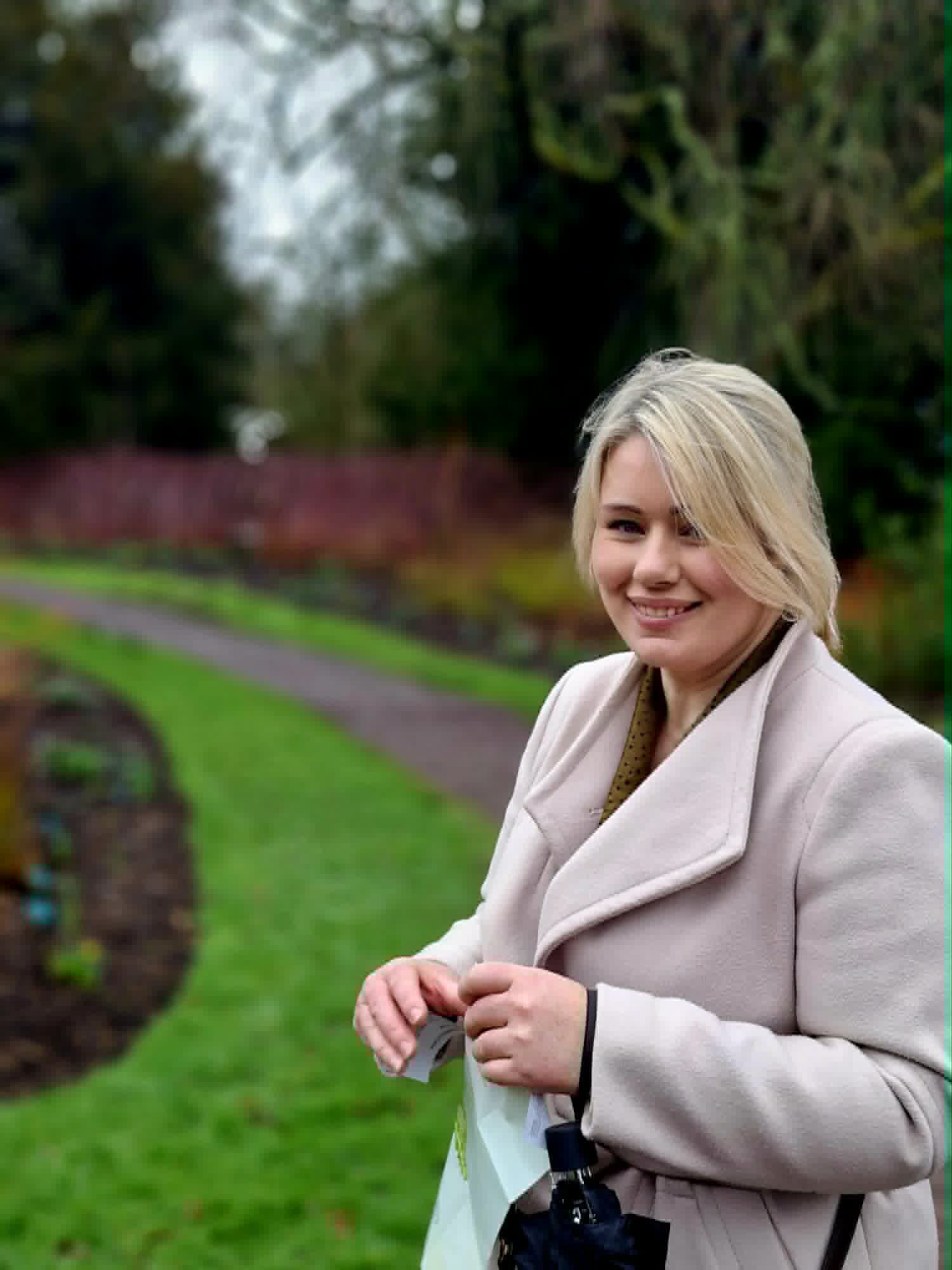
I sat down with Deirdre O’Sullivan Darcy to talk about her life in tourism, her connection to Killarney and the experiences that shaped her as a guide.

deirdre.jpg

  •  Who is Deirdre O’Sullivan Darcy behind the guide badge?
My name is Deirdre O'Sullivan Darcy and I am from Killarney, Co. Kerry.
I have worked in tourism and hospitality all my life. I have 9 brothers and sisters and I studied Applied Languages at the University of Limerick (French, German and Japanese). I travelled and worked in different places around the world for approximately 8 years, including Australia, Japan, USA, France and Germany, as well as backpacking and touring in many countries (Italy, Vietnam, Singapore, New Zealand, Canada, Cambodia, Thailand, Malaysia and India to mention a few).
I moved home to Killarney in 2009 and have worked in tourism/hospitality since then.
I am a Regional Tour guide, I have just completed my National Tour Guide training and my hope is to be a self-employed tourist guide around Ireland. 
I am a volunteer announcer/PA at the local sports stadium and I have been an active officer with my local GAA club, Spa GAA Club, for 15 years, where I am currently the club registrar.
My hobbies are reading, Irish history and tourism, sport (Gaelic games), swimming and walking.
  • Where do you feel most at home in Ireland?
The home where I grew up is still my 'home' in my heart. But really just Killarney in general is home for me. It's a tourist town so is always busy, but for me my memories of growing up are playing hide and seek at Muckross gardens, my aunts taking us walking in the National Park and it was full of adventures, taking my dad's boat out on the lakes of Killarney to go fishing, having a picnic with my parents and my siblings on Inisfallen Island - today all these would be a great visit for any tourist but for me it was just part of my childhood - I honestly didn't appreciate how lucky I was growing up!
  •  Is there something about Ireland that you only really understand once you live here?
The culture - for example how important nature is to us, we can't always explain it but we have our beliefs and superstitions in nature with the birds and the trees. Our language that we mix English and Irish sometimes, and some words in Irish have meaning only an Irish person would understand, we cannot translate it to English with the same meaning. Living in Ireland you understand things like - having a cup of tea with someone is a solution for so many problems, the comfort of sitting in front of a fire at home,  a drive in the countryside and you could end up anywhere! That our history is everywhere, every stone, every tree, every building and every person has a part of our history and our story. And - we always complain that it rains so much but in reality Irish people like the rain - but we usually have no umbrella with us!
  • People often say the Irish are kind and helpful. What does kindness mean to you in everyday life? 
Being kind is sometimes the smallest thing. To say hello or smile at a stranger, to help someone with their bags or to give someone your parking ticket if it still has time left on it, and we always say thank you to the bus driver. Kindness is about respect and we usually think good things about strangers when we first meet them. Irish people are usually curious and genuinely interested in others when they first meet, Treat others the way you would like to be treated, and we often say in Ireland, if you have nothing good to say about a person then it is better to say nothing at all. 
  • How do Irish people usually show care for each other — quietly or openly?
Again, Irish people do little things to care or support each other. Baking homemade bread for someone, dropping a card to someone's house if someone is unwell, neighbours calling to each other to say hello or just to check in. Irish people would often be generous, and I don't mean with money, I mean with their time. Other nationalities often make fun of the Irish for their drinking, and yes we do often drink too much, but going for a drink with someone is often the same as meeting them for a walk or a coffee. It's how we enjoy company of others, sometimes people in the pub go there because they are lonely and want to chat to people. 
  • Is there a place in Ireland that is especially close to your heart? Why? 
Killarney or Dingle. Killarney because it is home and always will be. But Dingle is west Kerry has always been special to me. I don't know why, but it is just beautiful, the people are friendly, the Irish language and culture is very strong there and the landscapes are just beautiful. I have always said that if I ever won the lotto I would buy a home in west Kerry!
  • We know that people don't come to Ireland for the weather. What months do you think are the best for a vacation here?
If I was advising someone to visit Ireland, I would probably recommend the shoulder season - spring or autumn. It's a time of year when the weather is usually good, attractions are open but the country isn't too busy with tourists or tour buses.  
  • If Ireland were a person, how would you describe them? 
Eire - the Goddess. We grew up with Ireland described in the image of a beautiful Goddess. The word Eire is special to us (it's the Irish word for Ireland) and she is the human form of Ireland. Beautiful, serene, regal, a pure soul.
  • What advice would you give to a Hungarian visiting Ireland?
While Dublin is the most popular place for visitors to Ireland, I would recommend seeing other parts of the country too. To visit Dublin City and to visit Connemara for example are two completely different places. It would be the same for an Irish person to visit Hungary, if they only visit Budapest then they cannot say they have seen the 'real' Hungary!
  • I would like to ask you to send a short message to Hungarians about why they should go on vacation to Ireland?
Ireland is beautiful and welcoming. Irish people are so proud to show off our country and to meet new people. Our country is thousands of years old and we have had centuries of occupation and fighting for our identity to be seen again. We are tough, resilient, friendly and incredibly proud of who we are, and we love to welcome people to our country and show them our culture and landscapes and people.
Thank you Deirdre!
Judit, from just next door
deirdre.jpg

 hu.png

A turizmus nem csupán helyszínekről szól – hanem az emberekről is, akik történeteikkel és személyiségükkel életet visznek ezekbe a helyekbe.
Deirdre O’Sullivan Darcy-val a turizmusban eltöltött életéről, Killarneyhez kötődő emlékeiről és azokról a tapasztalatokról beszélgettem, amelyek idegenvezetőként formálták őt.
  • Ki is valójában Deirdre O’Sullivan Darcy az idegenvezetői jelvény mögött?

A nevem Deirdre O’Sullivan Darcy, és Killarneyből, Kerry megyéből származom.

Egész életemben a turizmusban és a vendéglátásban dolgoztam. Kilenc testvérem van, és az University of Limerick egyetemen alkalmazott nyelveket tanultam – francia, német és japán szakon. Körülbelül nyolc éven át éltem és dolgoztam a világ különböző részein, többek között Ausztráliában, Japánban, az Egyesült Államokban, Franciaországban és Németországban. Emellett hátizsákos utazóként és turistaként is számos országot bejártam, például Olaszországot, Vietnámot, Szingapúrt, Új-Zélandot, Kanadát, Kambodzsát, Thaiföldet, Malajziát és Indiát – hogy csak néhányat említsek.

2009-ben költöztem vissza Killarneybe, és azóta is a turizmus és a vendéglátás területén dolgozom.

Regionális túravezetőként dolgozom, nemrég pedig befejeztem a National Tour Guide képzést is. A célom, hogy önálló, self-employed idegenvezetőként dolgozhassak Írország-szerte.

Önkéntes bemondóként és hangosbemondó-kezelőként is tevékenykedem a helyi sportstadionban, emellett már 15 éve aktív tisztségviselője vagyok a helyi Spa GAA Clubnak, ahol jelenleg klubregisztrátorként dolgozom.

A hobbijaim közé tartozik az olvasás, az ír történelem és turizmus, a sport – különösen a gael játékok –, valamint az úszás és a gyaloglás.

  • Hol érzi magát igazán otthon Írországban?

Az a ház, ahol felnőttem, a szívemben ma is az „otthonom”. De igazából maga Killarney jelenti számomra az otthont. Bár turisztikai város, így mindig nyüzsgő és mozgalmas, számomra elsősorban a gyerekkori emlékeket jelenti.

Emlékszem, ahogy bújócskáztunk a Muckross Gardens kertjeiben, vagy amikor a nagynénéim sétálni vittek minket a Nemzeti Parkba – az egész tele volt kalanddal és felfedezéssel. Sokszor kivittük édesapám csónakját a Killarney tavakra horgászni, vagy piknikezni mentünk a szüleimmel és testvéreimmel az Inisfallen-szigetre.

Ma ezek mind különleges élményt jelentenének egy turistának, számomra viszont egyszerűen a gyermekkor természetes részei voltak. Őszintén szólva akkoriban nem is értettem, milyen szerencsés voltam, hogy ilyen helyen nőhettem fel.

  • Van olyan dolog Írországban, amit az ember csak akkor ért meg igazán, ha itt él?

Igen – maga az ír kultúra ilyen. Például az, hogy a természet mennyire fontos része az életünknek. Ezt sokszor nehéz szavakba önteni, de rengeteg hiedelem és babona kapcsolódik a madarakhoz, a fákhoz és a természethez általában.

A nyelvünk is különleges ebből a szempontból. Gyakran keverjük az angolt és az ír nyelvet, és vannak olyan ír szavak vagy kifejezések, amelyeket egyszerűen nem lehet ugyanazzal a jelentéssel vagy érzéssel lefordítani angolra.

Ha valaki itt él, idővel olyan dolgokat is megért, hogy egy csésze tea szinte minden problémára gyógyír lehet. Hogy milyen különleges érzés otthon ülni a kandalló vagy a tűz mellett. Vagy hogy egy vidéki autózásból könnyen spontán kaland lehet, és az ember végül bárhol kiköthet.

Azt is megérti, hogy Írország történelme mindenhol jelen van. Minden kőben, minden fában, minden épületben és minden ember történetében ott él a múlt egy darabja.

És persze ott van az eső is. Az írek állandóan panaszkodnak miatta, de az igazság az, hogy valójában szeretjük az esőt – még ha legtöbbször esernyő sincs nálunk.

  • Sokan mondják, hogy az írek kedvesek és segítőkészek. Mit jelent Ön számára a kedvesség a mindennapi életben?

A kedvesség sokszor a legapróbb dolgokban mutatkozik meg. Egy mosolyban vagy köszönésben egy idegen felé, abban, hogy segítünk valakinek a csomagjaival, vagy akár odaadjuk a parkolójegyünket egy másik embernek, ha még maradt rajta idő. És nálunk természetes dolog az is, hogy megköszönjük a buszsofőr munkáját.

A kedvesség számomra elsősorban a tiszteletről szól. Az írek általában nyitottan és jóindulattal fordulnak az idegenek felé, amikor először találkoznak velük. Kíváncsiak vagyunk egymásra, és őszintén érdeklődünk a másik ember iránt.

Van egy egyszerű szemléletünk is: úgy bánj másokkal, ahogyan szeretnéd, hogy veled bánjanak. És Írországban gyakran mondjuk azt is, hogy ha nincs valami jó, amit mondhatnál valakiről, akkor inkább ne mondj semmit.

  • Az írek általában nyíltan vagy inkább csendesen mutatják ki a törődésüket egymás felé?

Az írek inkább apró gesztusokkal mutatják ki, hogy törődnek egymással. Például sütnek valakinek házi kenyeret, képeslapot vagy üdvözlőkártyát dobnak be ahhoz, aki beteg, vagy egyszerűen csak átkiabálnak a szomszédnak egy köszönésre vagy hogy megkérdezzék, minden rendben van-e.

Az ír emberek általában nagylelkűek – és ez nem feltétlenül a pénzről szól, hanem az idejükről.

Más nemzetek gyakran viccelődnek az írek alkoholfogyasztásán, és igen, előfordul, hogy túl sokat iszunk. De nálunk elmenni valakivel egy italra sokszor ugyanazt jelenti, mint máshol beülni egy kávéra vagy elmenni egy sétára. Ez az együtt töltött időről és a társaságról szól.

Sokan azért mennek el a pub-ba is, mert magányosak, és szeretnének beszélgetni valakivel.

  • Van olyan hely Írországban, amely különösen közel áll a szívéhez? Miért?

Killarney és Dingle mindenképpen ilyen helyek számomra. Killarney azért, mert az az otthonom, és mindig is az marad.

De Dingle és általában West Kerry is mindig különleges helyet foglalt el a szívemben. Nehéz pontosan megmagyarázni, miért – egyszerűen van valami varázsa. Gyönyörű a táj, az emberek barátságosak, és ott még ma is nagyon erősen él az ír nyelv és a hagyományos ír kultúra.

Mindig azt szoktam mondani, hogy ha egyszer megnyerném a lottót, biztosan vennék egy házat West Kerryben.

  • Mindannyian tudjuk, hogy az emberek nem az időjárás miatt jönnek Írországba. Ön szerint mely hónapok a legideálisabbak egy írországi nyaraláshoz?

Ha valakinek tanácsot kellene adnom, valószínűleg a tavaszi vagy az őszi időszakot ajánlanám Írország meglátogatására.

Ilyenkor az időjárás általában kellemes, a látványosságok és turisztikai helyszínek nyitva vannak, ugyanakkor az ország még nincs annyira zsúfolva turistákkal és turistabuszokkal, mint a nyári csúcsszezonban.

  • Ha Írország egy ember lenne, hogyan jellemezné őt?

Éire-ként – az istennőként.

Úgy nőttünk fel, hogy Írországot gyakran egy gyönyörű istennő alakjában képzeltük el. Az „Éire” szó különösen fontos számunkra – ez Írország neve ír nyelven –, és egyben Írország megszemélyesített alakját is jelenti.

Számomra Éire gyönyörű, nyugodt és méltóságteljes. Olyan alak, aki tiszta lelkű, erős, mégis békét sugároz.

  • Milyen tanácsot adna egy magyar embernek, aki Írországba látogat?

Bár a legtöbb látogató elsősorban Dublint keresi fel, én mindenképpen azt tanácsolnám, hogy az ország más részeit is érdemes felfedezni.

Dublin és például Connemara teljesen eltérő világot képviselnek – mintha két különböző Írország lenne.

Ugyanez igaz fordítva is. Ha egy ír ember csak Budapestet látogatja meg, akkor valójában nem mondhatja azt, hogy megismerte az „igazi” Magyarországot.

  • Szeretném megkérni, hogy küldjön egy rövid üzenetet a magyar embereknek arról, miért érdemes Írországba látogatniuk.

Írország gyönyörű és vendégszerető ország. Az írek büszkék arra, hogy megmutathatják hazájukat, és mindig örömmel találkoznak új emberekkel.

Az országunk több ezer éves múltra tekint vissza, és évszázadokon át küzdöttünk azért, hogy megőrizzük identitásunkat és újra hallathassuk a hangunkat. Az ír emberek erősek, kitartóak, barátságosak és rendkívül büszkék arra, akik vagyunk.

Szeretjük megmutatni a látogatóknak kultúránkat, tájainkat és az embereinket – és örömmel látunk mindenkit Írországban!

Thanks Deirdre!

Judit, innen a szomszedbol...


Muckross Haz

Fáilte!


A Celtic Navigator mai állomása: Muckross Ház     (English version down there!)

Follow The Celtic Navigator on Facebook for more journeys!


 Még mindig a Killarney National Parkban vagyunk – és még leszünk is egy ideig, mert itt rengeteg a látnivaló!

40307fa9-96bb-4522-bb6d-6fc2c216a6b3.jpg

A Muckross Ház az egyik méltán híres és érdekes pontja a parknak, a maga történetével és az épület abszolút csodálatos megjelenésével.

A fák közül, ahogy előbukkan a látványa, megállítja az embert egy pillanatra, nem hiszel a szemednek, ahogy a sziluettje kirajzolódik a lombozat mögül. Aztán megszaporázod a lépteidet, hogy kikerüljön a takarásból, mert innentől már látni akarod… Az utad a tó mellett vezet el, méretes fák között, gazdagon burjánzó növényvilággal körülvéve. Ha szerencséd van, összefutsz néhány ír gímszarvassal is – légy figyelmes, és ne háborgasd őket, kérlek!

"szörnyű" tó...

A Muckross Ház a Muckross tó partján fekszik, ami Írország legmélyebb tava, néhol eléri a 75 méter mélységet is! (Csak összehasonlításként: a mi Balatonunk legmélyebb pontja Tihanynál van, ahol a tó mélysége megközelítőleg 12,5 méter.)

11283.jpg

A tóban a helyi folklór szerint egy Muckie nevű szörny lakik, a skóciai Loch Ness  Nessie-jéhez hasonlatosan…

A ház, ahol a királynő is vendégeskedett

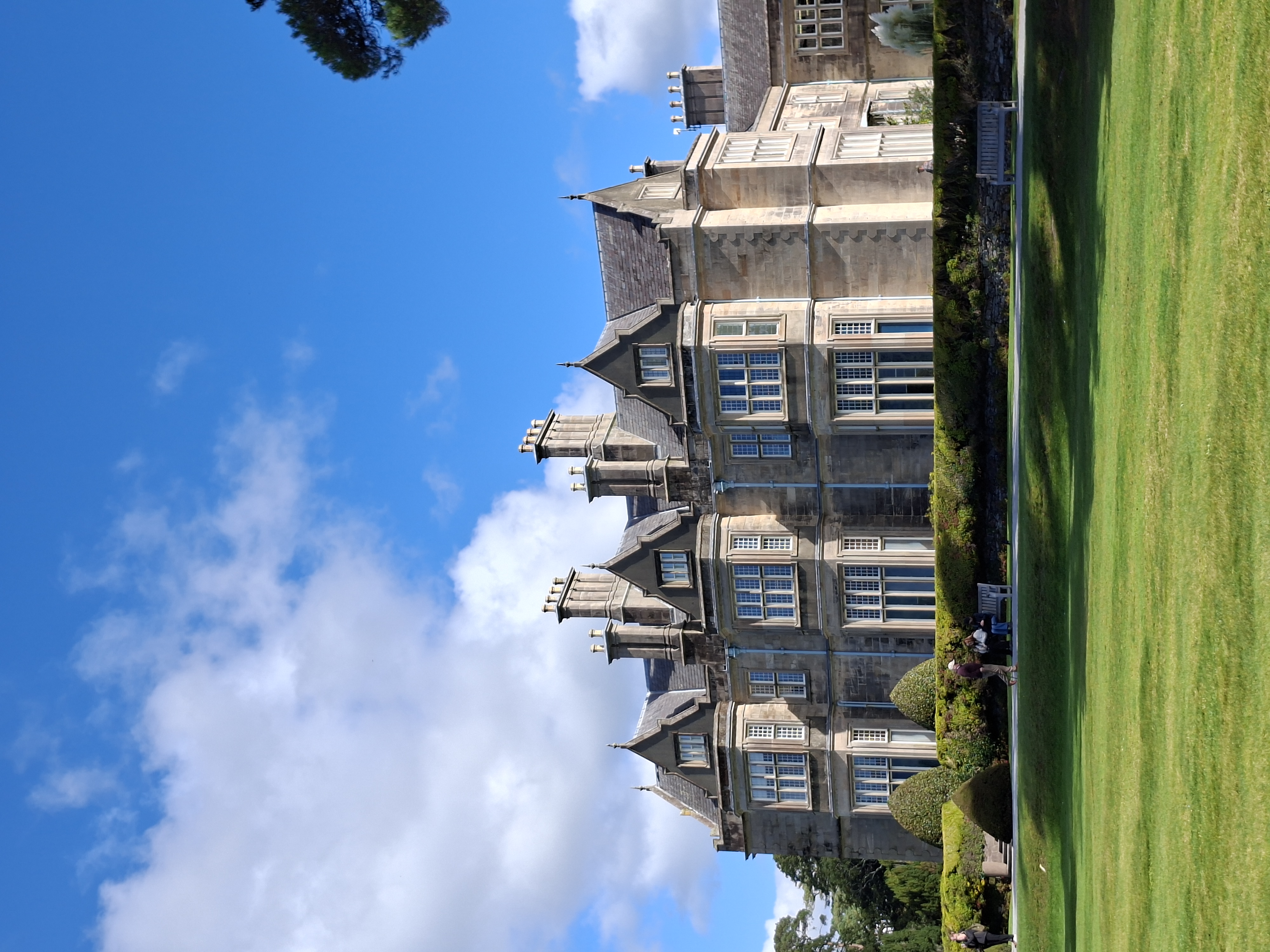
A ház 1843-ban épült, William Burn tervei alapján, Tudor revival stílusban. A kastélynak 65 szobája van, és amire nagyon büszkék, hogy 1861-ben Viktória királynő is megszállt itt 2 napra. Nem mellesleg a család tönkre is ment a felújításokba, átalakításokba…

Különleges kertek és egy "szörnyű" tó

A Muckross Ház kertjei világhírűek, és ingyenesen látogathatóak az év minden napján. A kertek különlegessége a hely klímája, ami igen kedvező az itt található növények számára.

1bcc95e1-3486-462a-8924-724c1548a080.jpg

Ha tavasszal látogatnál el ide, a lélegzeted is elállna a színkavalkádtól, a sokszínűségtől! A két legszembetűnőbb csoda számodra a rododendronok lennének, ami itt invazív faj, és sajnos azt kell mondjam, mindent elkövetnek a visszaszorítására.

A másik varázslatot adó növény a hortenzia. Minden fajtája és formája fellelhető a kertben, amikor közöttük sétálsz, a hitetlenek is elhiszik, hogy itt bizony tündérek élnek! Olyan elképesztő színekben mutatkozik meg, hogy garantáltan tele lesz a telefonod a fotóikkal.

01b04a92-0cb4-45bb-a5b0-8f7a2ea96299.jpg

Egy kis kanyargó patak tekereg a növények között, aprócska, simán át tudsz lépni felette néhány helyen.

A kertek egy 20 hektáros területen fekszenek, és igen sokféle fajtát építettek erre helyre.

88bc6b82-b505-47b4-9da7-2f8ec66c4c0c.jpg

Van itt sziklakert, különleges törpefenyőkkel és havasi növényekkel. Aztán itt van a Sunken Garden, a süllyesztett kert, szezonális, egynyári virágokkal, mértani elrendezéssel. 

Találhatsz itt egy ún. vízi kertet is, tavakkal, tündérrózsa-gyűjteménnyel – maga a béke és nyugalom szigete!

Valamint itt az Arboretum számos igen ritka, egzotikus fával, egy méretes Üvegház és egy Zárt kert, ami kézműves foglalkozásoknak ad otthont.

4a9005b0-aca6-419a-b31a-9a93978e1ace.jpg

  1. Tippek a látogatáshoz: Étel, ital és tündérek

A kertben található étterem és kávézó kellemes felfrissülést ad, érdemes ide beülni egy jó teára vagy kávéra, no meg egy kiváló sajttortára.

Hidd el, ez az a hely, amit nem fogsz megbánni!

A parkolók felőli oldalon található egy ajándékbolt, ahol mindent megtalálsz, ami Irish, legyen az édesség, ékszer, vagy könyv.

A területet be tudod járni az úgynevezett jaunting car-ral, ami lovasfogatos kocsit takar, vagy biciklivel is, de a gyalogtúra is teljesen kivitelezhető, nem fogsz eltévedni!

7f2aa336-3f03-4016-9037-e4f8b776dca6.jpg

Ha véletlenül belefutnál a tündérekbe, jó, ha van nálad számukra valami kis ajándék, azt nagyon szeretik. Ha jókedvükben találod őket, még a kívánságodat is teljesítik!

De ha a Leprechaunba (ejtsd: Leprekon) botlanál, akkor jó lesz vigyázni! Ez a fura kis fickó magával cipel egy nagy bödön aranyat. Ha elkapod, nézz a szemébe, de ne merj pislogni, mert abban a pillanatban elillan… Ám ha nem pislogsz, akkor bizony könyörgésre fogja, és teljesíti 3 kívánságodat a szabadságáért cserébe, vagy neked adja az aranyat. Szóval légy résen mindenképpen!


df88d85c-0895-4b3e-9278-5e26182b91dc.jpg

Hamarosan folytatjuk utunkat, addig is vigyázzatok magatokra,

Judit, innen a szomszédból


ie.png

The Celtic Navigator’s Stop of the Day: Muckross House. 


We’re still in Killarney National Park—and we’ll be here for a while, as there’s just so much to see!
Muckross House is one of the park's most famous and fascinating landmarks, boasting a rich history and an absolutely stunning presence.


As it emerges from the trees, the sight of it truly makes you stop in your tracks. You can’t quite believe your eyes as the silhouette appears through the branches. Then, you find yourself quickening your pace just to get a clear view…

The path leads you along the lakeshore, between towering trees and through lush, thriving greenery. If you’re lucky, you might even spot some Irish Red Deer—stay alert, but please, do not disturb them!


Muckross House sits on the shores of Muckross Lake, Ireland’s deepest lake, reaching depths of up to 75 metres! 
Local folklore says a monster named "Muckie" lives in these depths, much like Scotland’s Nessie in Loch Ness…
The house was built in 1843, designed by William Burn in the Tudor Revival style.

The mansion has 65 rooms, and they are particularly proud that Queen Victoria stayed here for two nights in 1861. Interestingly, the massive cost of the renovations and preparations for her visit actually drove the family into financial ruin…


The Muckross Gardens are world-renowned and free to visit year-round. Their secret lies in the local microclimate, which is incredibly kind to the plants here.
If you visit in the spring, the riot of colour will take your breath away! The two most striking wonders are the rhododendrons—which, though beautiful, are an invasive species here, and unfortunately, constant efforts are made to keep them under control.


The other magical sight is the hydrangea. Every variety and shape can be found in the garden; walking among them, even the most cynical would believe that fairies truly live here! The colours are so incredible that your phone is guaranteed to be full of photos of them.


A small, winding stream meanders through the greenery—it’s so narrow in places that you can simply step over it.
The gardens cover 20 hectares, featuring a huge variety of landscapes. There is a Rock Garden with unique dwarf conifers and alpine plants. Then there’s the Sunken Garden, with its geometric layouts and seasonal blooms.
You’ll also find a Water Garden with ponds and a water lily collection—the definition of peace and quiet! There is also an Arboretum with rare, exotic trees, a large Glasshouse, and a Walled Garden which houses various craft workshops.


The garden’s restaurant and café offer a lovely spot for a break. It’s well worth stopping by for a good tea or coffee, and of course, a slice of excellent cheesecake. Trust me, you won't regret it!
On the side near the car parks, you’ll find a gift shop stocked with everything "Irish"—from sweets and jewellery to books and crafts.


You can explore the area by jaunting car or by bike, but a walking tour is also perfectly doable—you won’t get lost!
If you happen to run into any fairies, it’s a good idea to have a little gift for them; they love that. If you catch them in a good mood, they might even grant you a wish!


But if you stumble upon a Leprechaun, you’d better be careful! This strange little fellow carries a pot of gold. If you catch him, look him straight in the eye and don’t you dare blink—he’ll vanish the second you do. But if you keep your gaze fixed, he’ll start begging for his freedom and grant you three wishes or give you his gold. So, stay sharp!
Our journey continues soon, but until then, take care of yourselves!

Judit, from just next door


The Killarney National Park

Fáilte!

 hu.png

A Celtic Navigator mai állomása: A Killarney Nemzeti Park.

A Killarney Nemzeti Park Kerry megyében található, Killarney városnak a környezetében.

A Park 10 236 hektáron terül el és a legöregebb Nemzeti Park a 7 közül – Írországban.

3c75e5b8-5227-4eca-a847-bcaf688da5e7.jpg

1932-ben alapították, eredetileg Bourne Vincent Memorial Park néven. Erről a későbbiekben majd még mesélek nektek.

A Parkban 3 nagy tó található:

Alsó tó – Lough Lein
Közbülső tó – Muckross Lake
Felső tó - Upper Lake

Legérdekesebb ezek közül a Muckross Lake a maga 75 méteres (!!!) mélységével, és a számolhatatlanul sok kis kiugró sziklájával, ami igen nehézzé teszi a behajózását. Csakis megfelelő vízijártassággal lehet rajta csónakázni/hajókázni, különben az ember fia igen hamar komoly bajban találhatja magát.

Az Alsó tavon (Lough Lein) kb. 30 sziget található, a 3 legnagyobb:

Innisfallen sziget: Ez a leghíresebb, itt találhatók az egykori kolostor romjai, ahol az Innisfallen-i évkönyveket (Annals of Innisfallen) írták f3cb4ca2-ec88-4775-b974-0b6c820930fc.jpg
Browne sziget: ami a jellegzetes mészkőszikláiról híres (gyakran nevezik a Nyulak Szigetének is)
Ross sziget: ami gyakorlatilag egy félsziget. Nem sziget. Furák ezek az írek… Itt áll a Ross Castle és Európa egyik legöregebb rézbányája is itt található.

Ezekről majd külön-külön is muszáj lesz írnom, mert mind egytől egyig megér egy mesét!

A tavakat két folyó táplálja – vízzel is és hallal is: a Flesk folyó és a Laune folyó. Azért hadd jegyezzem meg: mi magyarok tudjuk, mi az, hogy folyó. Mérete van. Itt minden, ami folyik: folyó. Ezen 4 év után sem tudok napirendre térni, de ha ők azt mondják, ki vagyok én, hogy megkérdőjelezzem ezen állítást?!

A Nemzeti Park állatvilága is érdekes, itt él az őshonos ír gimszarvas (Irish Red Deer), ami az ország legnagyobb emlősállata. A parkba komoly program keretében megpróbálták visszatelepíteni a rétisast, szerencsére a program komoly sikert ért el: 245 fiókát tudtak szabadon engedni, ami mára stabil, önfenntartó állományt jelent.

Itt található Európa utolsó 3 tiszafaerdőjének egyike, amely a Muckross House és a Dinis Cottage között található a Reenadinna erdőben. Írországban komoly szimbólum a tiszafa, annak ellenére, hogy minden porcikája mérgező… Vagy éppen emiatt?

A Nemzeti Park Írország legrégebbi tölgyesével büszkélkedhet – a Tomies-hegy lábánál, a Lough Lein túloldalán található – ez a terület nehezen nagyon megközelíthető, ami segített megőrizni a tölgyes erdőt a maga érintetlen szépségében.3513cffc-c045-48ca-bc05-b78adbade8f9.jpg

Több, mint 4 500 év történelme is itt bújkál a fák között, a tavak partjain, mind őrzi a saját legendáját, történetét, amit én helyszínenként fel fogok tárni, posztról posztra.

A Park őrzi az emlékét a Muckross Háznak, a Muckross Apátságnak, itt leled meg a Ross kastélyt, a Killarney Házat, a Deenagh Kunyhót, Lord Brandon Házát, vagy a Knockreer Házat a maga történetével. 11253.jpg

Nem is említve (de) a természeti csodákról, mint például a Ladies View, Torc vízesés, Dinnis kunyhó vagy az apátság ma is aktív temetőjét, vagy a személyes kedvenc helyem a Gap of Dunloe (Dunloe hágó).

A Muckross Ház mellett található botanikus kert számunkra egy csoda a rododendronok tömegével, a hortenzia-erdő változatos színeivel.

Van a ház mellett egy viktoriánus kert is, engem onnan úgy kellett kirángatni, mert szívem szerint ott is aludtam volna a különleges virágágyások mellett.

Az itteni állandó magas páratartalom megteszi a hatását a növényekre: gazdagon burjánzik minden… is.

A parkot körbejárhatod gyalog, vagy biciklivel, esetleg lovasfogattal (jaunting car), vagy lóháton is, ha arra van ihleted.

Ne felejtsd el: több, mint 10 000 hektár… 3 hatalmas tó… Felsorolni is nehéz, mi minden van itt. A hegyek, a hágók, az erdők, a völgyek olyas sokszínűvé varázsolták az itteni világot, hogy 1 hét nem lenne elég bejárni mindet!dd3b8bb0-1ab4-4f79-8eca-0a15c16c692c.jpg

És akkor még nem találkoztál a Tündérekkel, vagy éppenséggel a Koboldokkal…

De visszatérünk minderre. Körbejárjuk a Killarney Nemzeti Parkot együtt, megnézzük részleteiben is, megmutatom őket a maguk történetével együtt, legyen az szomorú, vagy éppen vidám.

Írországnak nehéz a történelme, kaptak ők is rendesen az évszázadok alatt, meggyötörte őket a sors.

De mindezzel együtt ez itt egy Varázsvilág, egy mesebeli sziget, szebbnél szebb részekkel, vadregényes tájakkal, hihetetlen tengerpartokkal, természeti képződményekkel.

…és még a Halászkirály is itt lakik…

Előhozom nektek. Legyen szép napotok!

Judit – innen a szomszédból


ie.png


Today’s stop of the Celtic Navigator: Killarney National Park.

Killarney National Park is located in County Kerry, in the surroundings of the town of Killarney.

The park covers 10,236 hectares and is the oldest of Ireland’s seven national parks.

It was founded in 1932, originally under the name Bourne Vincent Memorial Park. I’ll tell you more about that story later.

There are three large lakes within the park:

  • Lower Lake – Lough Lein

  • Middle Lake – Muckross Lake

  • Upper Lake

The most fascinating of the three is Muckross Lake, with its depth of 75 metres (yes, really!) and its countless rocky outcrops. These make navigation extremely difficult. You can only boat here with proper local knowledge and experience — otherwise, you can get into serious trouble very quickly.

On the Lower Lake (Lough Lein) there are around 30 islands. The three largest are:

Innisfallen Island – the most famous one, home to the ruins of an early monastery where the Annals of Innisfallen were written.
Browne’s Island – known for its characteristic limestone rocks (often called Rabbit Island).
Ross Island – which is technically a peninsula, not an island at all. The Irish are funny like that… This is where Ross Castle stands, and where one of Europe’s oldest copper mines can also be found.

Each of these deserves its own story — and I will come back to them one by one.

The lakes are fed by two rivers, both with water and fish: the River Flesk and the River Laune. And let me add this with a smile: we Hungarians have a very clear idea of what counts as a “river” — it has a certain size. Here, anything that flows is called a river. After four years, I still haven’t quite made peace with this… but if they say so, who am I to argue?

The wildlife of the national park is just as interesting. This is home to the native Irish Red Deer, the largest land mammal in Ireland. There was also a serious reintroduction programme for the white-tailed eagle, which thankfully proved very successful: 245 chicks were released, creating a stable, self-sustaining population.

One of Europe’s last three yew forests can also be found here, between Muckross House and Dinis Cottage, in the Reenadinna woodland. In Ireland, the yew tree is a powerful symbol — despite the fact that every part of it is poisonous… or perhaps because of it.

The park is also proud of Ireland’s oldest oak woodland, located at the foot of Tomies Mountain, on the far side of Lough Lein. The area is extremely difficult to access, which helped preserve the forest in its untouched beauty.

More than 4,500 years of history are hidden here — among the trees, along the lake shores — each place guarding its own legend and story. I will uncover these for you site by site, post by post.

Within the park you will find Muckross House, Muckross Abbey, Ross Castle, Killarney House, Deenagh Lodge, Lord Brandon’s Cottage, and Knockreer House — each with its own past.

And that’s without even starting on the natural wonders: Ladies View, Torc Waterfall, Dinis Cottage, the still-active cemetery of the abbey, or my personal favourite, the Gap of Dunloe.

Next to Muckross House lies a botanical garden that feels like a small miracle, with masses of rhododendrons and a woodland of hydrangeas in constantly changing colours.

There is also a Victorian garden beside the house — I practically had to be dragged out of there, as I would happily have spent the night among the flower beds.

The permanently high humidity here works wonders for plant life: everything grows — abundantly.

You can explore the park on foot, by bicycle, by horse-drawn jaunting car, or even on horseback, if the mood takes you.

Just remember: more than 10,000 hectares… three vast lakes… it’s hard even to list everything that’s here. Mountains, passes, forests and valleys turn this landscape into something so richly varied that even a week would not be enough to see it all.

And that’s before you’ve met the fairies — or perhaps the leprechauns…

But we will return to all of this. We will walk through Killarney National Park together, look at it in detail, and I will show it to you through its stories — sad ones and joyful ones alike.

Ireland has a hard history. They have taken their share of hardship over the centuries.

And yet, despite it all, this is a world of magic — a fairytale island, with wild landscapes, breathtaking coastlines, and extraordinary natural formations.

…and yes, even the Fisher King lives here…

I’ll bring it all to you. Until then, have a beautiful day.

Judit — from next door


Killarney National Park


 Kedvcsinálónak, hogy itt nem esik állandóan az eső!

Amikor süt a nap, a levegő kristálytiszta, és ettől a színek ragyognak.

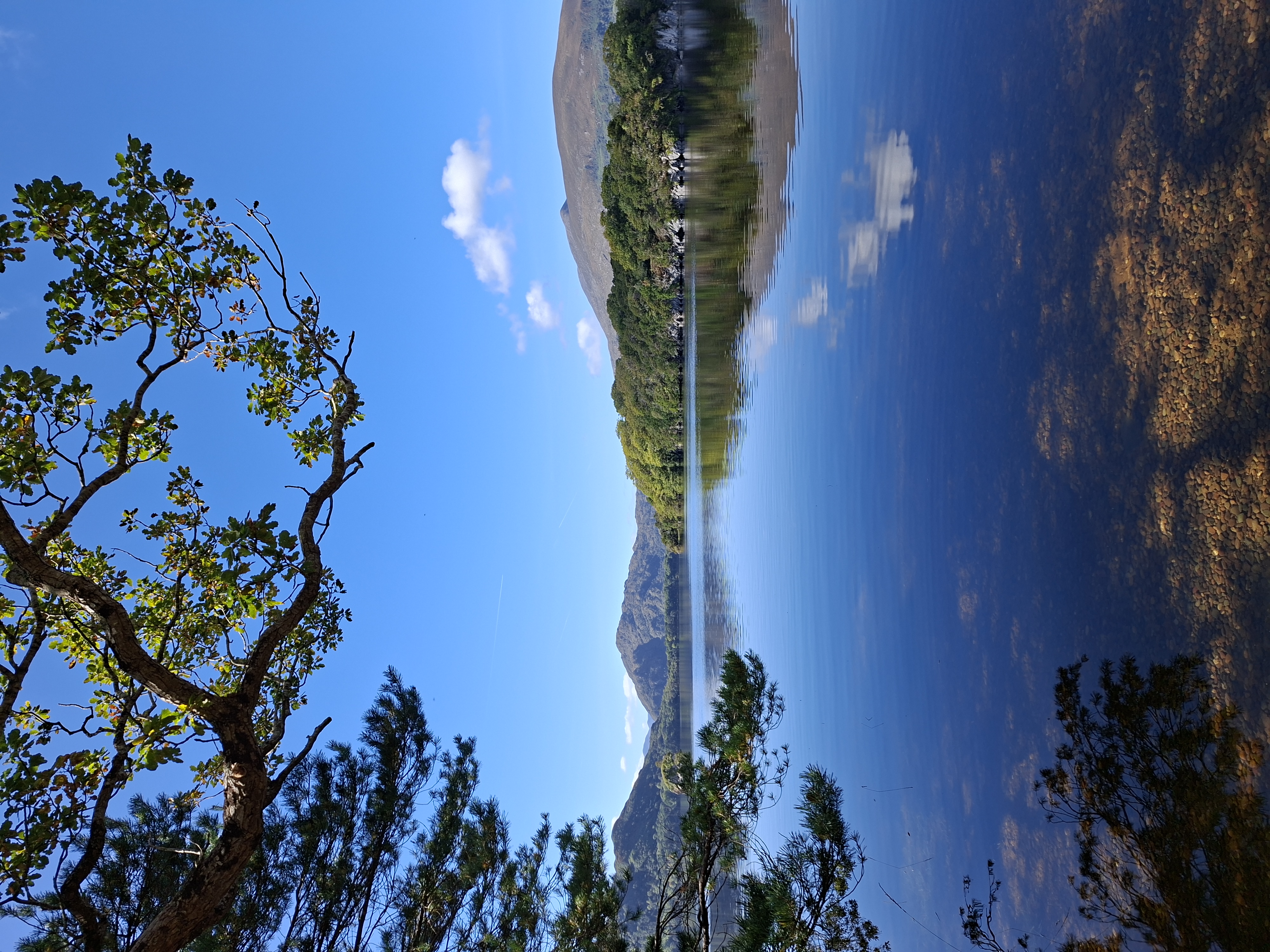
A képet a Killarney Nemzeti Parkban készítettem, innen fogunk elindulni ezen az utazáson, ez lesz a kiindulópont.

A fotón a Muckross Lake-et látod, más néven Middle Lake-et, mert itt bizony három is van.

Ahogy közeledik a tavasz, az időjárás kedvez számunkra, hogy egyre több időt tölthessünk a napon, a szabadban, mesebeli fényképekkel illusztrálhassam az utunkat.

Elnavigállak erre a meseszerű helyre, elmesélem a történetét, a titkait. Bepillantunk a Tündérek és Koboldok világába is – mert ez Írország!

Ha bármilyen kérdésed adódna, kérdezz bátran, legjobb tudásommal foglak megválaszolni!

Kellemes hétvégét mindenkinek.

 Judit, innen a szomszédból


Just as a little mood-setter: it doesn’t rain all the time here.

When the sun comes out, the air turns crystal clear, and the colours begin to glow.

I took this photo in Killarney National Park. This is where our journey will begin — this will be our starting point.

In the photo you can see Muckross Lake, also known as the Middle Lake, because there are actually three lakes here.

As spring approaches, the weather becomes kinder to us, allowing us to spend more and more time outdoors, in the sunshine, illustrating our path with fairytale-like photographs.

I will guide you to this magical place, tell you its story and its secrets. We will also take a glimpse into the world of fairies and leprechauns — because this is Ireland.

If you have any questions, feel free to ask. I will answer them to the best of my knowledge.

Wishing everyone a lovely weekend.


Judit, from next door 


The Fairy Folk

A blog indulásának másnapján esett le a tantusz, hogy még csak nem is ellenőriztem a nevet… hogy létezik-e már, hogy egyedülálló-e.

Na a meglepetés akkor ért, amikor egy barátnőm rákérdezett, hogy mit is keressen, én pedig vidáman adtam meg a nevet, ami Green Roads volt. Aztán visszaszólt, hogy ugyan melyiket is kellene megnyitnia, mert hangyabojnyi van belőle.

Hanyattestem a döbbenettől, meg attól, hogy hogy a viharba követhettem el ekkora baklövést?!

A tettek mezejére kullogtam megszégyenülve, és sietős keresgélésbe fogtam, hogy megtaláljam a nevemet. Alex barátom (AI) segített, hogy a rám illeszkedő, engem megmutató nevet megtaláljuk. Nem könnyű, mert már nincs új a nap alatt!

Most ezzel megnyugtattam magam, ez én vagyok, ezzel kezdhetek mesélni, elnavigálni az olvasót az ír földek, hegyek-völgyek világába. Idegenvezetőként hitelesen el tudlak vinni a Tündérek és Koboldok világába, tengerpartokra, városokba, ősi romvárakhoz, monostorokba.

Meg tudom mutatni az ír valóságot, az itteni életet, az ír embereket bemutatva.

Be fogok mutatni néhány számomra igen kedves ír embert, hogy közelebb hozzam hozzátok ezt a barátságos népet.

  Judit, innen a szomszédból


The day after launching the blog, it suddenly hit me that I hadn’t even checked the name… whether it already existed, whether it was unique at all.

The real surprise came when a friend asked what exactly she should look for. I cheerfully gave her the name — Green Roads. She wrote back asking which one she was supposed to open, because there were loads of them.

I was knocked flat by the shock, and by the thought of how on earth I could have made such a mistake.

Slightly ashamed, I dragged myself into action and started searching in a hurry to find my own name. My friend Alex (AI) helped me look for a name that actually fits me and shows who I am. It’s not easy — there really is nothing new under the sun!

Now I’ve made peace with it. This is me, and from here I can start telling stories, navigating the reader through the world of Irish lands, hills and valleys. As a tour guide, I can genuinely take you into the world of fairies and leprechauns, to coastlines, towns, ancient ruined castles and monasteries.

I can show you the Irish reality — everyday life here, through the people who live it.

I will also introduce a few Irish people who are very close to my heart, to help bring this friendly nation a little closer to you.

 Judit, from next door


Aos Sí – The Fairy Folk - egy magyar idegenvezető Írországban


hu.png   

Ez a blog azért született, mert Írországról gyakran csak képeket, felszínes történeteket vagy gyors ajánlásokat látunk.

Én viszont járom ezt az országot, tanulom, figyelem és egyre jobban értem.

Magyar vagyok, Írországban élek, és idegenvezetőként szeretném megmutatni azt, amit egy utazás során könnyű észrevétlenül elhagyni: az utakat, az összefüggéseket és a mögöttük rejlő történeteket.

Magyar vagyok, és Írországban élek. Buszvezetőként dolgozom, emellett idegenvezetőnek tanulok és készülök erre a pályára, így az utakat nemcsak utasként, hanem a volán mögül is ismerem. Számomra egy táj, egy város vagy egy történelmi helyszín nem önmagában érdekes, hanem az összefüggéseiben: hogyan kapcsolódik a múlthoz, az emberekhez és a mindennapokhoz.

Ezt a szemléletet szeretném továbbadni ebben a blogban.

A Celtic navigator nem útikalauz és nem toplisták gyűjteménye. Inkább egy lassabb, figyelmesebb utazás Írországon keresztül: helyek, történetek és utak mentén, idegenvezetői szemmel. Ha szeretnéd jobban érteni ezt az országot, nemcsak látni, hanem összefüggéseiben megismerni, akkor tarts velem ezen az úton.

Üdvözlettel

Judit, innen  a szomszédból

ie.png

This blog was born because Ireland is so often shown only through images, surface-level stories, or quick recommendations.

I, on the other hand, travel this country, study it, observe it, and understand it more and more.

I am Hungarian, I live in Ireland, and as a tour guide in training I want to show what is easy to miss while travelling: the roads, the connections, and the stories behind them.

I am Hungarian and I live in Ireland. I work as a bus driver, and alongside that I am training to become a tour guide, preparing for this path. Because of this, I know the roads not only as a passenger, but also from behind the wheel. For me, a landscape, a town, or a historical site is not interesting on its own, but in its context: how it connects to the past, to people, and to everyday life.

This is the way of seeing that I want to share through this blog.

The Celtic Navigator is not a guidebook and not a collection of top lists. It is rather a slower, more attentive journey through Ireland: along places, stories, and roads, seen through the eyes of a guide. If you would like to understand this country better — not only to see it, but to get to know it through its connections — then walk this road with me.

With regards,

Judit, from next door


süti beállítások módosítása